Notes
November 2025
Note (2025-11-30 21:20)
作為一項古老技藝,竹棚在其他地區越來越少見。近年來大陸多數城市已禁止用竹棚,2021 年住建部要求全面淘汰竹腳手架,香港和澳門成為為數不多讓竹棚存續的陣地。但今年 3 月,香港政府以安全為由,要求 50% 以上的公共項目必須使用金屬棚架,同時表示未打算完全淘汰竹棚,對此民間反對和支持聲並存。
香港建築業界使用大量竹棚有其重要理由。香港樓間距小、巷道窄,相比標準化的金屬架,竹棚能更靈活地適應不同施工環境。何炳德解釋,香港有許多樓齡超過 50 年的老樓,若搭建金屬棚架,需採取螺絲磚牆等更多設備、材料,住戶未必能接受。相較之下,竹枝重量輕,搭棚工人用「一把刀仔」就能工作,搭建速度快也靈活,作業空間需求小。
另有業內文章指出,面對香港常見的強風天氣,品質好的毛竹具有彈性但不易斷裂,這讓竹棚在大風中能適度搖擺而不塌,金屬棚架雖剛性強,但可能因局部失效而整體傾覆。在酷暑天,竹棚也不如金屬容易導熱發燙。
通常來說,建新樓或拆樓時用金屬棚架更好, 若是在舊樓中維修冷氣機等情況,使用竹的懸空棚架更為合理,兩者可以是互相補充而非取代的關係。
[…] More
Note (2025-11-30 06:21)
“How Good Engineers Write Bad Code at Big Companies”:
To pure engineers - engineers working on self-contained technical projects, like a programming language - the only explanation for bad code is incompetence. But impure engineers operate more like plumbers or electricians. They’re working to deadlines on projects that are relatively new to them, and even if their technical fundamentals are impeccable, there’s always something about the particular setup of this situation that’s awkward or surprising. To impure engineers, bad code is inevitable. As long as the overall system works well enough, the project is a success.
[I]t’s a mistake to attribute primary responsibility to the engineers at those companies. If you could wave a magic wand and make every engineer twice as strong, you would still have bad code, because almost nobody can come into a brand new codebase and quickly make changes with zero mistakes. The root cause is that most big company engineers are forced to do most of their work in unfamiliar codebases.
A pretty high percentage of code changes are made by “beginners”: people who have onboarded to the company, the codebase, or even the programming language in the past six months.
[The big companies are] giving up some amount of expertise and software quality in order to gain the ability to rapidly deploy skilled engineers onto whatever the problem-of-the-month is.
Note (2025-11-29 19:32)
But the pushback against #MeToo reveals a certain peril to storytelling as politics, not only in the retraumatization evident in the practice of revealing one’s most intimate harms before an infinite online audience, which could always include those listening in bad faith. But also, a discursive market opened up in which trauma became a kind of currency of authenticity, resulting in a doubled exploitation. This idea, while not very nice, lingers in the use of harm as an authoritative form of rhetorical defense. The problem here is not what is said, but how it is used. A friction has since emerged between an awareness of weaponization of harm and emotion and the continued need to express oneself as vulnerably as possible in order to come off as sincere. This friction is unresolved.
Punishing strangers for their perceived perversion is a form of compensation for a process that is already completed: the erosion of erotic and emotional privacy through internet-driven surveillance practices, practices we have since turned inward on ourselves. In short, we have become our own panopticons.
When it became desirable and permissible to transform our own lives into content, it didn’t take long before a sense of entitlement emerged that extended that transformation to people we know and to strangers.
Such unproductive and antisocial behavior [of submitting screenshots, notes, videos, and photos with calls for collective judgement] is justified as a step toward liberation from predation, misogyny, or any number of other harms. But the punitive mindset we’ve developed towards relationships is indicative of an inability to imagine a future of gendered or sexual relations without subjugation. To couch that in the language of harm reduction and trauma delegitimizes both.
However, it is always too easy to blame the young [for sexlessness]. It was my generation that failed to instill the social norms necessary to prevent a situation where fear of strangers on the internet has successfully replaced the disciplinary apparatus more commonly held by religious or conservative doctrine.
[…] More
Note (2025-11-28 19:21)
“The Claims of Close Reading”:
In our work, we assumed—before anything else, before any evidence—that there was meaning, and that we were rational, and we decided that we treat texts, ourselves, and each other this way.
On the first day of each new class, I tell my students about the philosopher Donald Davidson’s idea of radical interpretation. To make sense of a foreign language, or indeed any language, Davidson argues, a listener must begin with a stance of good faith by assuming that the person they’re listening to has rational beliefs and is making meaning. This must happen before the listener can begin to interpret what that meaning is and whether she agrees with it.
Note (2025-11-28 17:17)
“The Fatal Flaw in Using Bitcoin as a Currency”:
The value of any currency never depends on rigid control of money supply. The most basic economics textbook will tell you that any value depends on the balance of supply and demand. To ignore money demand is to court disaster — because the demand for money is not stable.
The original issuers of paper currency understood the importance of money demand. In 10th century China, paper currency was introduced with a simultaneous legal requirement that taxes to the government be paid in paper. This immediately created a demand for paper currency alongside its supply, which gave it value. As long as the supply of and demand for paper money were balanced, value was maintained. When demand for the new paper currency fell short of what the government chose to supply, inflation and hyperinflation were the inevitable result.
This lack of an automatic demand for crypto is a problem, but not the fatal flaw which prevents crypto acting as a currency. The flaw is that bitcoin supply can only rise, not fall.
Note (2025-11-28 06:00)
this must be the funniest thing i’ve ever typed
Note (2025-11-26 06:23)
“The Invention of the Modern Self”:
The history of modern selfhood […] centers on the inescapable and ultimately unresolvable tension between a desire for uniqueness, accompanied by a belief in the power of self-transformation, and the recognition of how deeply we are shaped by our biology and social origins.
[T]he modern self, at least in its European and North American varieties, [is] a kind of paradox. On the one hand, in the 18th century, as the mental grip of religion weakened, “the idea spread that ordinary people had the potential for autonomy and were capable of exerting their liberty, whether in the choice of spouse, occupation, religious beliefs, or governing bodies.” But at the very same time, “individuals came to be viewed as creatures shaped by social conditioning…. Original sin lost its hold, but seeping into its place [came] the idea that our identities are formed by class, race, ethnicity, sexuality, age, profession, and marital status.”
Note (2025-11-26 06:13)
“The existential struggle between being a ‘we’ and an ‘us’”:
In extending the existential and phenomenological importance of ‘the Look’ to collective (rather than individual) experience, Sartre draws a distinction between the ‘we-subject’ (le nous-sujet) and the ‘we-object’ (le nous-objet). Since nous in French is used for the first-person plural, in English we could translate Sartre (as his American translator Hazel Barnes did) as drawing a distinction between the ‘we’ and the ‘us’. Sartre himself was wary of deriving theoretical insights from mere grammatical categories, especially when many languages do not even use or differentiate between a first-person plural pronoun. But, as the philosopher Sarah Pawlett-Jackson argues in The Phenomenology of the Second-Person Plural (2025), pronouns came into use precisely in order to capture a particular form of lived experience, a particular phenomenological standpoint.
In order to experience the world from a ‘we-perspective’, certain basic criteria need to be met. First of all, there must be a plurality of subjects who are undergoing the experience. If I am the only person enjoying the sunset, my enjoyment is felt by me as an individual subject, rather than by we as a plural subject. Secondly, the subjects must be unified in some sense. If a stranger sitting near me is enjoying the same sunset, it would be presumptuous to say that we experienced it together unless our enjoyment has been communicated to one another. We haven’t created the necessary unity.
[W]hereas a we-experience can take place between a dyad, an us-experience is necessarily triadic in its structure. A felt sense of ‘us-ness’ can arise only in relation to an external Third element.
With us-experiences, one can speak of a plural or collective double-consciousness. The members of the ‘we’ are no longer singularly conscious of a shared object of experience, but are doubly conscious of themselves as an object of experience. In this sense, an us-experience arises because of a collective relation to an external Third.
[…] More
Note (2025-11-24 22:23)
I notice two kinds of happiness in the diary: a soft joy, which makes me ease up and feel more like myself, and a hard one that again and again leads me into shame.
The soft one is private—I struggle to share it with others—whereas the one that drives me into misery is social.
[The hard one is a] happiness I have to share. I want to force it upon people. I’m ashamed but I can’t stop myself: the excitement, it seems, comes from being seen as the sort of person that this or that person desires.
It was a strange mix of relief and discomfort to meet a person who loved me in the Erich Fromm sense (“I want the loved person to grow and unfold for his own sake, and in his own ways, and not for the purpose of serving me.”) A relief because it was like decompression to let go of all of the fear and insecurity that made me shape myself for approval, and to feel my own sense of curiosity and value unfold. But discomfort because it put me on a collision course with the life I had been living and many of the people I interacted with. When I understood my values, I had to confront the pain of looking stupid and having people get angry at me when they disagreed with my decisions; I had to let go of the safety of social status and the coping mechanisms I had relied on.
Note (2025-11-24 22:20)
The Witness on the newcomer injunctions in Hong Kong:
高等法院在 2019 至 2020 年間,先後應機場管理局、港鐵、律政司及警務處申請,批出共 6 項臨時禁制令,分別針對阻礙機場及港鐵站運作、阻礙或破壞紀律部隊宿舍、「起底」及滋擾警務人員及家人、在網上發布煽動暴力言論,以及於 2020 年底應律政司申請,頒令禁止「起底」及滋擾司法人員及家人。
翻查資料,當時高院原訟庭頒發此 6 項臨時禁制令,均是應原告方單方面申請(ex parte application)批准。被告一方多數列為「非法及故意作出申索書中…所禁止的任何行為的人」 (persons unlawfully and wilfully conducting themselves in the acts prohibited… of the indorsement of claim),沒有確切身分。
上述 6 項禁令頒發時,均屬臨時禁制令(interim injunction),並於獲頒臨時禁制令同年,獲法院批准延長「至正式審訊或另作命令(until trial or further order)」。
[…] More
Note (2025-11-23 23:17)
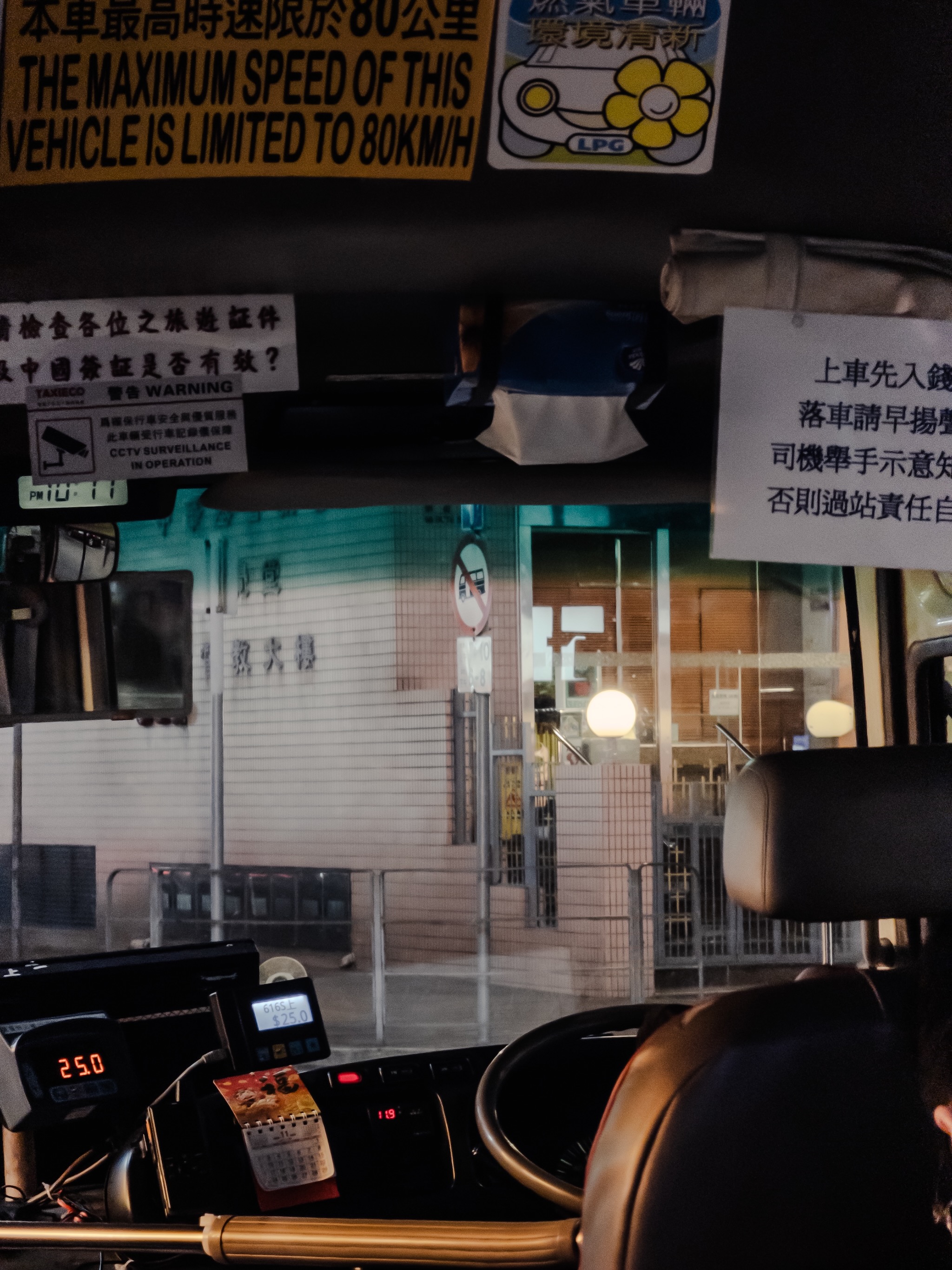
坐了夺命(literally)小巴,但是遇上一个只开 80 出头的佛系司机,太子到落马洲开了 35 分钟,命保住了。
Note (2025-11-21 19:43)
“The growing problem with China’s unreliable numbers”:
Rather than one single number, statisticians usually produce three. The expenditure approach to GDP — which many countries consider the best way to capture activity in a modern economy — measures consumption, investment and net exports.
The production approach instead tries to capture companies’ output minus their inputs. The income approach estimates what individuals and businesses earn and pay in tax. In theory, the three different approaches should equal each other.
Until 1993, China went a fourth way. Its material product scheme, the offspring of an approach pioneered in the Soviet Union, counted commodities and goods produced across state-run factories.
Eager to understand its own growth as it reopened to global trade, and under pressure to improve its data, Beijing drew on international guidance. Canada’s national statistical agency launched a partnership with the NBS in the 1990s.
All other large economies publish quarterly breakdowns of the expenditure approach to GDP, including investment, consumption and net exports. They also publish subcomponents of those broad categories, which can provide useful insights into what is driving the headline figures. […]
China does not publish this data. Emerging Advisors, a consultancy, says that across 40 emerging economies it tracks, only four others do not publish such quarterly data, and they are countries with economies based on hydrocarbons. “We can’t stress enough how abnormal this is for an economy of any significant size,” noted economist Jonathan Anderson in a report this year.
Instead, China publishes quarterly data based on the production approach, which is harder to analyse. The expenditure GDP data is only published in nominal terms for the whole year.
Indeed, its contribution to annual growth has remained positive throughout the property slowdown and implying some significant source of new investment.
Logan Wright, who leads the China research team at Rhodium, argues that the NBS has not “as far as we know” explained this “offset”.
[…] More
Note (2025-11-20 20:40)
What counts as an “architecture” in discussions on Linux architecture support:
For example, Linux supports the User Mode Linux “architecture”, which lets the kernel run as an unprivileged process inside an existing kernel for testing purposes. By most normal definitions, User Mode Linux isn’t really a CPU architecture, even if the code for it lives alongside the kernel’s other architecture support code. On the other hand, the kernel considers all PowerPC CPUs to be one architecture, regardless of whether they’re running in big-endian or little-endian mode; most distributions count those as two architectures because software compiled for different endiannesses must be packaged separately. Even without architecture-wide incompatibilities like that, several architectures also offer different “levels” or optional extensions that make describing a piece of software’s requirements a bit difficult. RISC-V has, at the time of writing, 48 different standards adding a larger number of extensions.
Note (2025-11-20 19:23)
“The Ozempic Era Should Change How We Think About Self-Control”:
Someone who is overweight may have just as much willpower as a thinner person but need to deploy this willpower against stronger desires for food. In effect, thinner individuals might be getting credit for winning a battle that they never had to fight.
We can get clearer about the effects of GLP-1 drugs on self-control by drawing on a distinction between two different ways of acting moderately, which traces back to Aristotle. The first kind of moderate action lines up with how most people think of self-control: effortfully resisting doing something that you believe you shouldn’t do. The ancient Greek word for this form of moderation is enkrateia, which is usually translated into English as ‘continence’ (despite its contemporary associations with bladder control).
As we’ve seen, Ozempic does not seem to make those who take it more continent; it doesn’t help them resist strong temptations to eat more than they think they should. Rather, taking GLP-1 drugs brings people closer to the other form of moderation: sophrosyne, which is usually translated as ‘temperance’. While the continent person experiences many tempting desires and successfully resists them, the temperate person doesn’t face temptations in the first place.
[B]eing a highly self-controlled person seems mainly to involve using proactive strategies to avoid and manage temptations, rather than being good at directly and effortfully resisting them through sheer willpower.
Frankly, I still don’t feel totally comfortable with the idea of Ozempic for both the lack of evidence of its long-term side effects and, more importantly, the feeling that it risks eroding agency. Is the anesthesia of the appetite true “temperance,” or just a mimicry of the virtue?
Note (2025-11-18 10:23)
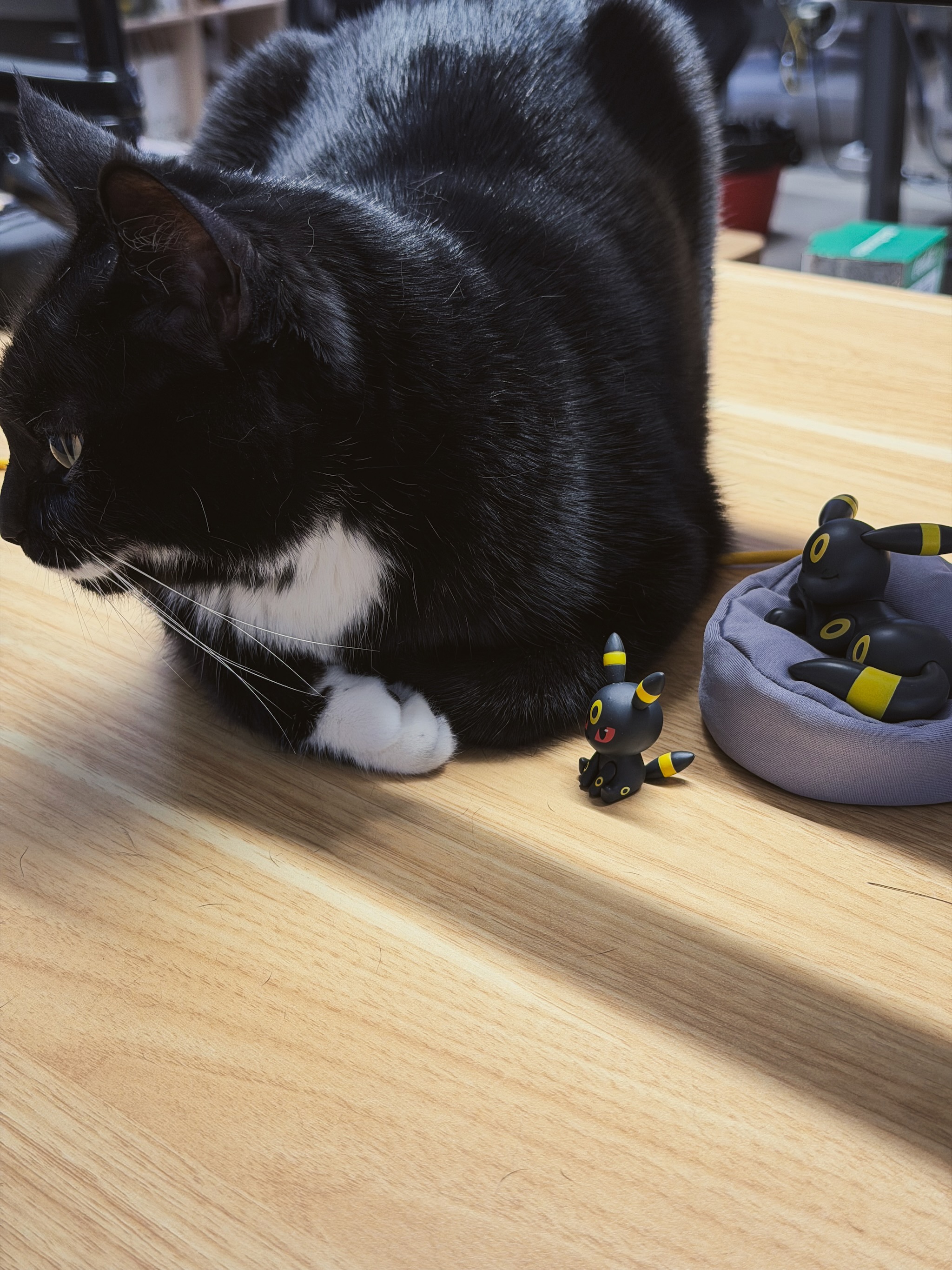
noir^3
Note (2025-11-16 10:18)
now i’m really having difficulty dealing with good weather
Note (2025-11-16 06:04)
“Review: Leah Libresco Sargeant’s ‘Dignity of Dependence’”:
Sexism has two pillars: the insistence that female biology is moral destiny, and the insistence that female moral destiny is inferior.
What is at stake is nothing less than affording women access to the tumult of total humanity. To propose that a woman’s biology consigns her to a single corner of the moral universe is to force her to undergo a violent truncation — a shrinkage of the sort that always attends the indignity of specialization.
Nothing innovative here, but the phrase the tumult of total humanity is so majestic that I can’t help gazing at it.
Note (2025-11-15 21:48)
“An Ant Is Drowning: Here’s How to Decide if You Should Save It”:
Queries like ‘Do individual ants deserve moral concern?’ risk conflating the scientific question of whether ants are sentient, the ethical question of whether only sentient beings deserve moral concern, and the practical question of whether a policy of caring for ants in a particular way is achievable or sustainable.
Scientifically, we can assess how likely particular beings are to possess capacities like sentience, by evaluating the available evidence. Ethically, we can assess how likely these capacities are to matter morally, by evaluating the available arguments. Practically, we can then put it all together to assess how likely these beings are to matter – and how to factor this into the way we live our lives.
Note (2025-11-15 18:46)
“The Hidden Costs of Masking for Women With ADHD and Autism”:
The harder someone works to appear ‘normal’, the more their difference disappears from view – and the less the world learns to make room for it. In hiding to belong, they only deepen the loneliness that made them hide in the first place.
In a perfect world, of course, I would lean toward unmasking. And I know many of you who are neurodivergent – and just as tired of pretending – would agree. It would be a relief to move through the world as our full selves, without apology. But the truth is, that kind of openness comes with risk. We still live among people who judge and criticise, who prefer – often unconsciously – those who resemble themselves.
Note (2025-11-15 09:48)
“Women Undergoing IVF” (translations mine):
What makes it even more difficult is that your entire life schedule becomes tied to it. You can’t plan what you’ll do next because it entirely depends on your hormone levels—something beyond your control. All aspects of your daily life—work, socializing, rest—must unconditionally give way to the treatment.
When we say these women have subjectivity, it doesn’t mean their decisions are completely free and unconstrained. On the contrary, what I observed is a form of subjectivity arising under structural pressure, or, a situational, struggling subjectivity. Throughout the long IVF process, they learn, make decisions, and communicate with doctors. This process itself is a profound practice of subjectivity. They internalize external expectations, such as those from family or society, and eventually articulate them as “my own decision.” Behind the statement “I want a child to complete my life,” there may be concerns for marital stability, anxiety about age, or imaginations of a “normal” family life. It is subjectivity operating in complex situations to translate external pressure into internal needs.
I want to portray the resilience, contradictions, and genuine realities of women navigating the intersections of technology, the body, family, and social structures. This fluid and situational subjectivity is the most authentic insight I’ve gained from my research.
Note (2025-11-13 06:44)
But I can’t get entirely behind the few-bad-apples theory. Nor can I so neatly separate the gooners as a whole from the rest of us. Think about it for a second: What are these gooners actually doing? Wasting hours each day consuming short-form video content. Chasing intensities of sensation across platforms. Parasocially fixating on microcelebrities who want their money. Broadcasting their love for those microcelebrities in public forums. Conducting bizarre self-experiments because someone on the internet told them to. In general, abjuring connective, other-directed pleasures for the comfort of staring at screens alone. Does any of this sound familiar? Do you maybe know some folks who get up to stuff like this? It’s true that gooners are masturbating while they engage in these behaviors. You could say that only makes them more honest.
Note (2025-11-12 22:13)
at least i was shown the first rung of the ladder
Note (2025-11-12 06:26)
“The Art of the Impersonal Essay”:
By the mid-nineties, the mind you were encouraged to develop, at King’s, was basically unchanged from the one students were expected to form in the mid-fifteen-hundreds. (The college was founded by Henry VI in 1441.) A discursive, objective, ironical, philosophical, elegant, rational mind. I was none of those things. I was expressive, messy, chaotic, and increasingly infuriated. A lot of my fury was directed at the university itself. The more I heard about the prior lives of my fellow-students, the more enraged I became.
I understood all three men to be “personal essayists” in the sense that they cared passionately about their subjects, but they themselves were rarely figures in any particular piece; their energies were directed elsewhere. And I followed their example, channelling my furies into coolly expressed explication, description, analysis.
That tone, for better or worse, has stayed with me. I was trained to write like this, and I write like this. I just can’t bleed out onto the page as some people do, or use all caps or italics to express emotion, even when I know it’s what’s expected and that many people not only prefer it but see it as a sign of authenticity. The essay-writing habits of my school days have never left me. I find I still don’t want people to relate to what I’m saying in an essay, or even be moved by the way I say it. (With fiction, I feel the opposite.) I just want to think out loud about the things that matter most to me.
Full disclosure: these strands are drawn, essentially, from four big isms. Feminism, existentialism, socialism, and humanism. Only the first is still fashionable, and the last has been so debased, misused, and weaponized over the centuries as to be almost unspeakable in polite company. Still, these were the ideas that formed me as a teenager, and they linger on in the way I think and write. No matter what the topic in the rectangle may be, they lie in wait, nudging me, correcting me, reminding me of what it is I really think. What I actually believe.
[…] More
Note (2025-11-12 05:57)
Wong, Sampson. Urban Strollology: Learning From Hong Kong [城市散步學:以香港作為起點]. Breakthrough, 2023.
捕捉和收集城市環境中所有美麗、有趣、啟發思考與聯想的空間與細節,就是我的 Pokémon GO 了。
「看出所以然」的意思,連向的就是所謂的「學術關懷」和「地方關懷」。
[社會學家理查‧桑內特(Richard Sennett)的《棲居》(Building and Dwelling: Ethics for the City)]中指出城市必然由兩種事物構成,一種是實體被建造的環境和各種觸摸得到的東西(樓宇),一種是人物生活時無盡的活動與實踐(棲居),兩者互為因果,如何互動影響,千絲萬縷,某程度上城市研究就是拆解它們之間的關係。這本書的知識觀點是,散步與觀看是「棲居」的一部分。我們若有意識地散步與觀看,將有可能進一步改變實體的城市空間。退一萬步而言,當我們持續有意識地散步與觀看,也立刻改變了實踐者本來的「城市生活」,因為頻頻散步的人,不再只功能性地使用城市環境。
[…] More
Note (2025-11-12 05:43)
For me, a walk is a way to force practice on a number of crafts manifesting in GOOD WORK (“the reward of good work is more work”).