Notes
November 2025
Note (2025-11-20 20:40)
What counts as an “architecture” in discussions on Linux architecture support:
For example, Linux supports the User Mode Linux “architecture”, which lets the kernel run as an unprivileged process inside an existing kernel for testing purposes. By most normal definitions, User Mode Linux isn’t really a CPU architecture, even if the code for it lives alongside the kernel’s other architecture support code. On the other hand, the kernel considers all PowerPC CPUs to be one architecture, regardless of whether they’re running in big-endian or little-endian mode; most distributions count those as two architectures because software compiled for different endiannesses must be packaged separately. Even without architecture-wide incompatibilities like that, several architectures also offer different “levels” or optional extensions that make describing a piece of software’s requirements a bit difficult. RISC-V has, at the time of writing, 48 different standards adding a larger number of extensions.
Note (2025-11-20 19:23)
“The Ozempic Era Should Change How We Think About Self-Control”:
Someone who is overweight may have just as much willpower as a thinner person but need to deploy this willpower against stronger desires for food. In effect, thinner individuals might be getting credit for winning a battle that they never had to fight.
We can get clearer about the effects of GLP-1 drugs on self-control by drawing on a distinction between two different ways of acting moderately, which traces back to Aristotle. The first kind of moderate action lines up with how most people think of self-control: effortfully resisting doing something that you believe you shouldn’t do. The ancient Greek word for this form of moderation is enkrateia, which is usually translated into English as ‘continence’ (despite its contemporary associations with bladder control).
As we’ve seen, Ozempic does not seem to make those who take it more continent; it doesn’t help them resist strong temptations to eat more than they think they should. Rather, taking GLP-1 drugs brings people closer to the other form of moderation: sophrosyne, which is usually translated as ‘temperance’. While the continent person experiences many tempting desires and successfully resists them, the temperate person doesn’t face temptations in the first place.
[B]eing a highly self-controlled person seems mainly to involve using proactive strategies to avoid and manage temptations, rather than being good at directly and effortfully resisting them through sheer willpower.
Frankly, I still don’t feel totally comfortable with the idea of Ozempic for both the lack of evidence of its long-term side effects and, more importantly, the feeling that it risks eroding agency. Is the anesthesia of the appetite true “temperance,” or just a mimicry of the virtue?
Note (2025-11-18 10:23)
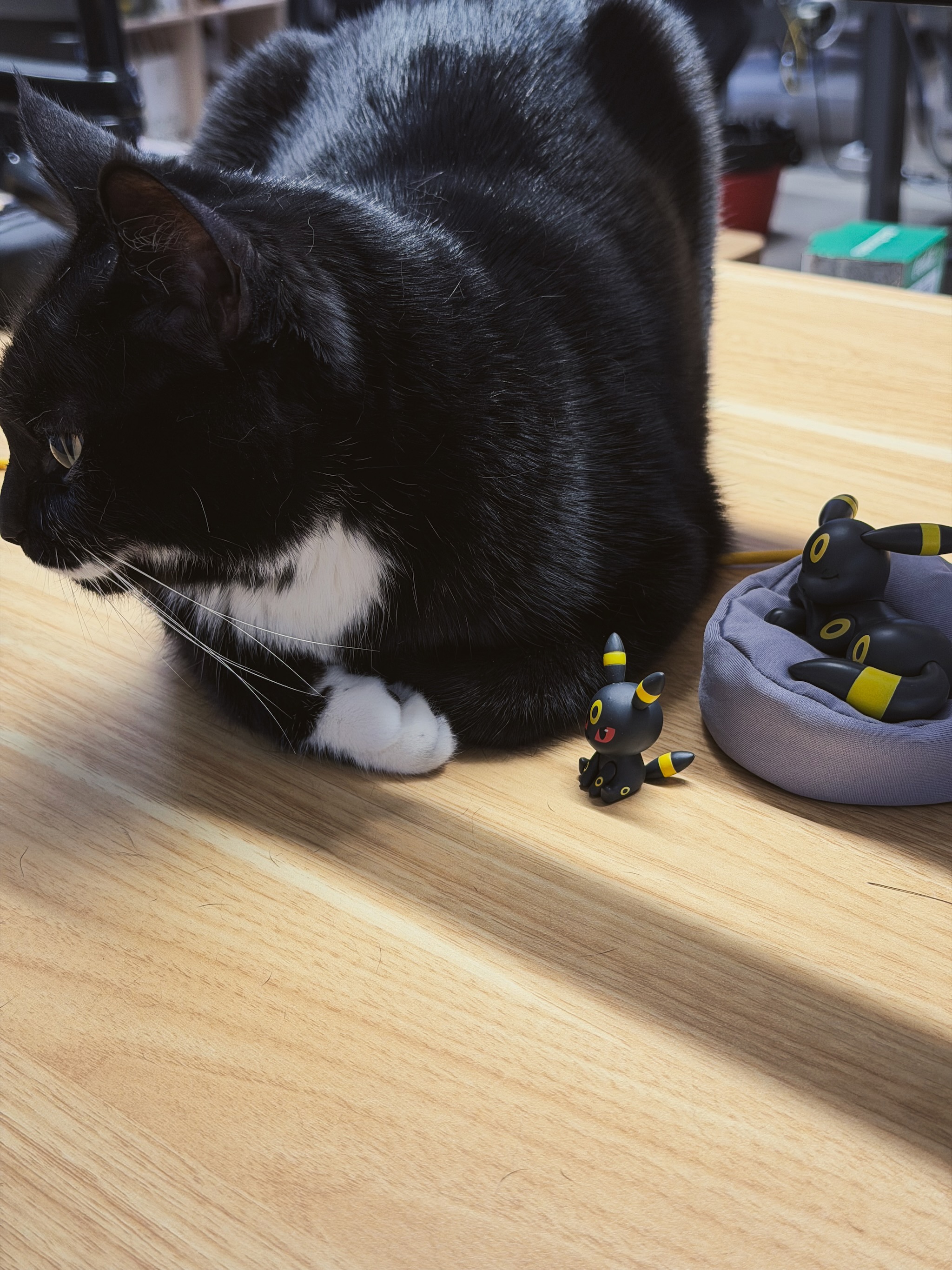
noir^3
Note (2025-11-16 10:18)
now i’m really having difficulty dealing with good weather
Note (2025-11-16 06:04)
“Review: Leah Libresco Sargeant’s ‘Dignity of Dependence’”:
Sexism has two pillars: the insistence that female biology is moral destiny, and the insistence that female moral destiny is inferior.
What is at stake is nothing less than affording women access to the tumult of total humanity. To propose that a woman’s biology consigns her to a single corner of the moral universe is to force her to undergo a violent truncation — a shrinkage of the sort that always attends the indignity of specialization.
Nothing innovative here, but the phrase the tumult of total humanity is so majestic that I can’t help gazing at it.
Note (2025-11-15 21:48)
“An Ant Is Drowning: Here’s How to Decide if You Should Save It”:
Queries like ‘Do individual ants deserve moral concern?’ risk conflating the scientific question of whether ants are sentient, the ethical question of whether only sentient beings deserve moral concern, and the practical question of whether a policy of caring for ants in a particular way is achievable or sustainable.
Scientifically, we can assess how likely particular beings are to possess capacities like sentience, by evaluating the available evidence. Ethically, we can assess how likely these capacities are to matter morally, by evaluating the available arguments. Practically, we can then put it all together to assess how likely these beings are to matter – and how to factor this into the way we live our lives.
Note (2025-11-15 18:46)
“The Hidden Costs of Masking for Women With ADHD and Autism”:
The harder someone works to appear ‘normal’, the more their difference disappears from view – and the less the world learns to make room for it. In hiding to belong, they only deepen the loneliness that made them hide in the first place.
In a perfect world, of course, I would lean toward unmasking. And I know many of you who are neurodivergent – and just as tired of pretending – would agree. It would be a relief to move through the world as our full selves, without apology. But the truth is, that kind of openness comes with risk. We still live among people who judge and criticise, who prefer – often unconsciously – those who resemble themselves.
Note (2025-11-15 09:48)
“Women Undergoing IVF” (translations mine):
What makes it even more difficult is that your entire life schedule becomes tied to it. You can’t plan what you’ll do next because it entirely depends on your hormone levels—something beyond your control. All aspects of your daily life—work, socializing, rest—must unconditionally give way to the treatment.
When we say these women have subjectivity, it doesn’t mean their decisions are completely free and unconstrained. On the contrary, what I observed is a form of subjectivity arising under structural pressure, or, a situational, struggling subjectivity. Throughout the long IVF process, they learn, make decisions, and communicate with doctors. This process itself is a profound practice of subjectivity. They internalize external expectations, such as those from family or society, and eventually articulate them as “my own decision.” Behind the statement “I want a child to complete my life,” there may be concerns for marital stability, anxiety about age, or imaginations of a “normal” family life. It is subjectivity operating in complex situations to translate external pressure into internal needs.
I want to portray the resilience, contradictions, and genuine realities of women navigating the intersections of technology, the body, family, and social structures. This fluid and situational subjectivity is the most authentic insight I’ve gained from my research.
Note (2025-11-13 06:44)
But I can’t get entirely behind the few-bad-apples theory. Nor can I so neatly separate the gooners as a whole from the rest of us. Think about it for a second: What are these gooners actually doing? Wasting hours each day consuming short-form video content. Chasing intensities of sensation across platforms. Parasocially fixating on microcelebrities who want their money. Broadcasting their love for those microcelebrities in public forums. Conducting bizarre self-experiments because someone on the internet told them to. In general, abjuring connective, other-directed pleasures for the comfort of staring at screens alone. Does any of this sound familiar? Do you maybe know some folks who get up to stuff like this? It’s true that gooners are masturbating while they engage in these behaviors. You could say that only makes them more honest.
Note (2025-11-12 22:13)
at least i was shown the first rung of the ladder
Note (2025-11-12 06:26)
“The Art of the Impersonal Essay”:
By the mid-nineties, the mind you were encouraged to develop, at King’s, was basically unchanged from the one students were expected to form in the mid-fifteen-hundreds. (The college was founded by Henry VI in 1441.) A discursive, objective, ironical, philosophical, elegant, rational mind. I was none of those things. I was expressive, messy, chaotic, and increasingly infuriated. A lot of my fury was directed at the university itself. The more I heard about the prior lives of my fellow-students, the more enraged I became.
I understood all three men to be “personal essayists” in the sense that they cared passionately about their subjects, but they themselves were rarely figures in any particular piece; their energies were directed elsewhere. And I followed their example, channelling my furies into coolly expressed explication, description, analysis.
That tone, for better or worse, has stayed with me. I was trained to write like this, and I write like this. I just can’t bleed out onto the page as some people do, or use all caps or italics to express emotion, even when I know it’s what’s expected and that many people not only prefer it but see it as a sign of authenticity. The essay-writing habits of my school days have never left me. I find I still don’t want people to relate to what I’m saying in an essay, or even be moved by the way I say it. (With fiction, I feel the opposite.) I just want to think out loud about the things that matter most to me.
Full disclosure: these strands are drawn, essentially, from four big isms. Feminism, existentialism, socialism, and humanism. Only the first is still fashionable, and the last has been so debased, misused, and weaponized over the centuries as to be almost unspeakable in polite company. Still, these were the ideas that formed me as a teenager, and they linger on in the way I think and write. No matter what the topic in the rectangle may be, they lie in wait, nudging me, correcting me, reminding me of what it is I really think. What I actually believe.
[…] More
Note (2025-11-12 05:57)
Wong, Sampson. Urban Strollology: Learning From Hong Kong [城市散步學:以香港作為起點]. Breakthrough, 2023.
捕捉和收集城市環境中所有美麗、有趣、啟發思考與聯想的空間與細節,就是我的 Pokémon GO 了。
「看出所以然」的意思,連向的就是所謂的「學術關懷」和「地方關懷」。
[社會學家理查‧桑內特(Richard Sennett)的《棲居》(Building and Dwelling: Ethics for the City)]中指出城市必然由兩種事物構成,一種是實體被建造的環境和各種觸摸得到的東西(樓宇),一種是人物生活時無盡的活動與實踐(棲居),兩者互為因果,如何互動影響,千絲萬縷,某程度上城市研究就是拆解它們之間的關係。這本書的知識觀點是,散步與觀看是「棲居」的一部分。我們若有意識地散步與觀看,將有可能進一步改變實體的城市空間。退一萬步而言,當我們持續有意識地散步與觀看,也立刻改變了實踐者本來的「城市生活」,因為頻頻散步的人,不再只功能性地使用城市環境。
[…] More
Note (2025-11-12 05:43)
For me, a walk is a way to force practice on a number of crafts manifesting in GOOD WORK (“the reward of good work is more work”).
Note (2025-11-12 05:35)
“Behind the Scenes on How Windows 95 Application Compatibility Patched Broken Programs”:
On very rare occasions, the problem is too deeply embedded in the program, and the only reasonable option is to patch it. Out of safety, the Windows 95 team got written permission from the vendor whenever they needed to patch a program. The consultation included detailed information on what the problem was and how it was going to be patched. In exchange, the team requested information from the vendor on what versions of their product are affected (and if they could send those versions for analysis), as well as a promise to fix the problem in their next version, because the next version won’t have the benefit of the patch.
Note (2025-11-10 06:33)
“Work, After Work: Notes From an Unemployed New Grad Watching the Job Market Break”:
The industrial nations of the twentieth century were built around the idea that work was the organising principle of life. Catholic social teaching talked about the dignity of labour. Socialist movements sang about the worker as a hero. Protestant infused capitalism turned productivity into a route to salvation. Even the centrist stripe of postwar politics treated a job as the main vehicle through which adults were meant to find status, income and a place in the world. This hung around through the neoliberal years, even as manufacturing shrank and services expanded. You can hear it every time someone from any mainstream party talks about “hard working families”.
The result is that a lot of our institutions still act as if giving everyone a job is the primary goal, long after the underlying economic logic has started to drift.
There is a strange symmetry here. On one side you have firms quietly routing labour through screens and robots, and repeating that jobs will be fine on aggregate. On the other you have unions and politicians insisting that jobs must be preserved, even when that means attaching people to tasks that are technically obsolete. Neither camp really articulates what it would mean for work itself to shrink as a central organising story. They just fight over where the remaining jobs will be and who will do them.
Note (2025-11-09 06:38)
“In What Sense Is Life Suffering?”:
[M]ental valence works like temperature.
[S]cientifically (according to the Buddhists) there’s only one kind of emotion: suffering. Apparent neutral is a fact about human perception with no objective significance. If you start at “very bad” and take away suffering, at some point your perception switches from “less suffering” to “more joyful”, but you’ve just been taking away suffering the whole time. The real “zero suffering” isn’t neutral / blah / just okay. It’s nirvana, which feels more blissful than we can possibly imagine.
Note (2025-11-09 06:22)
Simplifying his more complex argument, Plato offers at least two main criticisms of poetry. Wrongful poets err by producing a third-order imitation, an image of an image of fundamental reality. They re-enact the actions of mortal souls and states that are themselves re-enactments of the ideal forms of city and soul. Plato, in contrast, provides a second-order imitation, an image at only one remove from the ideal polis and ideal soul. The problem is not poetic images, but the distance from fundamental reality of the images of images that wrongful poets offer. In addition, wrongful poets try to obscure how vacant their subject matter is by the rhythmic seduction of poetic meter. Plato, in contrast, will here speak exclusively in prose (or as Aristotle noted, something between poetry and prose).
Note (2025-11-07 06:35)
“We Used to Read Things in This Country”:
But as interest in historical materialism surged after the global financial crisis of 2008, the left rediscovered the financial press as they searched for the rational kernel within the mystical shell. At first, the Financial Times was the center of attention. As Amber A’Lee Frost wrote in the Columbia Journalism Review, the FT “covers the world as it is—a global battle not of ideas or values, but of economic and political interests.”
[F]or most of human history, culture was exclusively oral. Knowledge was transmitted by speech, and what could be transmitted was what could be remembered. Oral culture was “aggregative rather than analytic”—full of redundancy, traditionalist in disposition, and embedded in the “human lifeworld,” rather than allowing abstract thought. Therefore, it was conservative and traditional, against innovation and any departure from the long-established norms of agricultural life. Repetition, cliché, and formulas are essential, as in Homer with his repeated phrases such as “swift ships” and “wine-dark sea.” With writing comes precision, analytical rigor, deliberate word choices, analytic remove from life, and abstract thought.
Then, with the emergence of electronic media, Ong sees society regressing/advancing into a “secondary orality,” which brings back many qualities of the first orality (note the supposedly permanent basis of writing)
Looking at social media, Weisenthal sees the return of oral values to dominance in the public square, like loud one-upmanship. Rather than the ideal of reasoned debate, social media sets the stage for constant jousting, rewarding those who can be viral and have memes ready in their memory, as today’s Homeric formula shifts both our political and neurological landscapes.
I do not hold that “the history of all hitherto existing society is the history of class struggles” for various tedious factual and periodizing reasons, but I would argue that the history of all hitherto literacy is the history of class struggle.
[…] More
‘Brenda’ (2025-11-06 11:31)
People are worried about AI psychosis. They’re worried about the amount of energy that AI uses. Fair. I’m worried that they put Copilot in Excel because Excel is the beast that drives our entire economy. 人们都担心 AI 精神病,都担心 AI 消耗的能源。担心得没错。但我担心的是他们把 Copilot 放进了 Excel,而 Excel 是驱动整个经济的巨兽。
And do you know who has tamed that beast? Brenda. Who is Brenda? She is a mid-level employee in every finance department, in every business across this stupid nation. And the Excel goddess herself descended from the heavens, kissed Brenda on her forehead, and the sweat from Brenda’s brow allows us to do capitalism. 你知道是谁驯服了这头巨兽吗?Brenda。Brenda 是谁?她是这个愚蠢国家每个金融部门、每个企业的中层员工。Excel 女神从天而降,亲吻 Brenda 的额头。是 Brenda 额头的汗水让资本主义得以运作。
Do you know what’s going to happen? Brenda is going to spend her time hatefully crafting a formula, because anyone who works that closely with Excel does not do anything lovingly. The more time you spend with Excel, the more you hate it. She’s going to birth that formula for a financial report, and then she’s going to send that financial report to a higher-up. 你知道会发生什么吗?Brenda 会花时间带着恨意精心制作公式,因为任何跟 Excel 这么亲近的人都不会带着爱去做事。你花在 Excel 上的时间越多,你就越恨它。她会为一份财务报告憋出那个公式,然后把报告发给一个上级。
[…] More
Note (2025-11-06 07:25)
Taiwan’s faith is a fundamentally different approach than Western religion, more aligned with earthly superficiality and materialism. The majority of temples, like the above one, are singular affairs, each a varying mash-up of Daoism, Buddhism, ancestor worship, and Chinese folk religion, all jammed with idols, icons, effigies, and other devotional objects. Faith is personal, malleable, and image-based, and most importantly, the connection between humans and their God(s) is very different6. Rather than humans seeking the transcendent Good by devotion to a powerful God, they believe in Gods that can be urged, nudged, and even bet on to satisfy their human wants and needs. Or, rather than building a City of Man to try and approximate the City of God, Chinese folk religions believe the City of Man can win over the City of God, with enough urging, offerings, and temples. That’s a very different relationship, devotional versus transactional, acceptance versus persuasive, even if sometimes the required “proper human behavior” overlaps.
I do believe there’s a direct connection between that lack of/different faith, and the intense Asian-style materialism I’ve now seen in Taiwan, Korea, China, and Hong Kong. In each I’ve seen/felt a pronounced spiritual emptiness, an unbound secular materialism that approaches pleasure-seeking narcissism, that has left me frustrated. The clichéd version of a cultural vapidness akin to gorging on cotton candy, and the collectible industry and its fetishization of the cute, is symptomatic of that.
[China] have a “just good enough” ethos that shows up most noticeably in their construction, where everything is less solid than it appears. This extends beyond the physical, and that “surface level is good enough” attitude makes China a simulacrum, so when you leave China, and land in Taipei, Seoul, or Hong Kong, you experience an unmistakable sensation of, “Ok. This is the genuine thing. It’s all more solid.”
[…] More
Note (2025-11-06 07:13)
“Transitions”:
For weeks, I felt an impending loss: the precious fact of having a son was about to be taken away. I wasn’t hung up on dynastic issues. Yet I think there’s something raw, some product of the primitive brain, that makes a father identify with a son. You see yourself in this other, beloved being. I was afraid of losing that.
Of course, transformation works both ways. A change in the person you love changes you as well: a toddler’s newfound independence, a teen’s leaving home. There is a shift in what I can only call the emotional weather—air moister, light different, mornings oddly new. Part of you embraces the change. And part of you remains tethered to the past, stubbornly loyal to the older version of the person.
He had several trans students, he said—his best students. They were serious, precise in their language. “They’re the only students with whom I can have a conversation about the soul,” he insisted. “For the others, that’s a narrow religious concept.” For the trans students, it was an obvious way to talk about identity. They had already made the definitive discovery that the body was malleable, which suggested that some integral part of oneself was other than corporeal. “These people represent the next stage of evolution,” Ajay said, not entirely serious but not quite kidding, either.
In fact, as I was to learn from a subsequent conversation in Berlin, she had never felt herself to be a man at all. “I certainly was a boy,” she told me. “And, like many trans women, I had a protracted boyhood. You see this in gay men, too—the aging-twink syndrome. Anyway, it was when that started to end, and the horizon of manhood approached, that the dissonance became all too clear.”
Note (2025-11-05 07:18)
“How I Learned to Stop Worrying and Love My Shitty Life”
Readers who prefer their self-help to come with a sheen of erudition can increasingly count on finding similar wisdom about human finitude dispensed in the philosophy section. Turning to philosophy to learn how to live is nothing new, of course. But the explicitly inspirational and instructional valence of much that appears today under that heading, even from academic presses, is striking — as is the apparent consensus that the central task of philosophy is to guide seekers to a greater acceptance of imperfection and insignificance. Sometimes these books focus on a particular school of philosophy, giving readers an “-ism” — existentialism, Buddhism, Taoism, and above all Stoicism, now practically a genre unto itself — with which to identify. Others staple together eclectic smatterings of received ideas into less partisan surveys on how to cope with failure and disillusionment.
At last we have managed to reify not merely social reality but the act of philosophizing itself, treating it, like our uncontrollable world, as a thing: a coping tool you might select, like an ice cream flavor, according to your personal taste.
At some point, however, I realized that I was spending more of my time thinking about my own despair than about the problems outside myself that were supposedly fueling it
While an exaggerated sense of our own importance is a recipe for both political and psychological disaster, it is also possible to overestimate our insignificance. Acceptance shades easily into excuse. With enough practice tolerating imperfection you can learn to forget what it is you’re failing to live up to.
When we are left to fend for ourselves, the conditions that shape our lives tend to feel alien and monolithic, forcing us to choose between the two polarities of self-help: the delusional optimism of positive thinking and the stoic acceptance taught by “philosophy.”
[…] More
Note (2025-11-05 07:15)
Henrik Karlsson on Dostoevsky:
If I think something, I don’t need to go through this big roundabout thing, where I “show” it and make it literary. I don’t need to make my writing ambiguous. If I just pay close enough attention to reality, the complexity of reality will seep into the writing and make it ambiguous and charged anyway. There is no need for me to be clever and artful and introduce mystery. Just “telling” it as I see it, if done with enough detail and care, is mysterious enough.
Dostoevsky, unlike most other authors, treats his character as a full individuals, as if they are too big to fit in his head: he isn’t using them as mouth pieces, but listening to them. His books are polyphonic: they are made up of a multitude of voices, each with their own inner logic and perspective, and there is no voice that stands above the others and knows the final truth. There are, of course, many books that have multiple voices in them, especially after Dostoevsky, but when I read these books, there is nearly always a subtle feeling that the characters are being used as dolls by the author, who is trying to get a view across; you can sense what the author thinks of everyone. But in Dostoevsky, each character is so strong and independent that they feel like authors in their own right.
Another thing I love about Dostoevsky is how he incorporates long essayistic segments in his novels, but he always makes sure to undermine the authority of the person expressing the ideas. You get these wonderful philosophical tracts about free will and the Russian church and utilitarianism and the nature of love, but you don’t know what to make of it, really, because the person saying it seems a bit deranged. This is closely connected to his deep respect for the individual: rhetorically convincing the reader of a perspective would undermine their autonomy. Compromising the characters forces the reader to stand alone, to borrow Kirkegaard’s phrase. Since there is no safe authority that you can submit to in Dostoevsky’s books, it is up to you to meet these hurting, strange voices with compassion, critical thinking, and curiosity; you have to evaluate if anything they say is valuable and true and applies to your life. As Ivan in The Brothers Karamazov says, there is nothing more painful to humans than our freedom, that we are responsible for everything we do, and so we long to submit to an authority. But Dostoevsky just won’t let us do that. He forces us to face our freedom.
[…] More
Note (2025-11-04 06:39)
PR people, always in search of influence, [] are developing a form of writing (press releases and influence campaigns are writing) that’s not so much search-engine-optimized as chatbot-optimized. It’s important, they say, to write with clear structure, to announce your intentions, and especially to include as many formatted sections and headings as you can. In other words, to get ChatGPT to pay attention, you must write more like ChatGPT.
The hour, in other words, is near, and, instead of being short-sighted or risk-averse, we should set to preparing. But for what? Again, for jumping into the AI mind, both to influence it and to hedge against human superfluousness. And how? The best way, Gwern thinks, for people who don’t work in AI at least, is to simply communicate in public to the AIs that already exist. “Much of the value of writing done recently or now is simply to get stuff into LLMs,” so as to teach them, he writes.
In an interview, he elaborated: “By writing, you are voting on the future of the shoggoth using some of the few currencies it acknowledges. If you aren’t writing, you’re kind of abdicating the future or your role in it.”
After all, you vote in elections even though you don’t expect to have a great effect on the result, because it’s important on some absolute moral level to send your wishes into the world. This sort of general moral thinking seems to me valuable here precisely because nobody knows what will happen, whether influence will compound or diminish over time. Turning to already formed instincts about how to interact with vast and complicated systems is a helpfully familiar way of not being paralyzed by weirdness and uncertainty. That sort of moral thinking is also crucial to mounting a case for human value even when compared to superintelligence.
[…] More
Note (2025-11-03 20:39)
“Do piped programs run sequentially or in parallel?”:
Piped commands are run in parallel. They keep reading from the pipe until they are terminated, they finish their work, or they receive an end-of-file indicator. When a pipe (or the data read from a pipe) gets too large, the command is terminated to prevent the system from running out of RAM.