Notes
January 2026
Note (2026-01-25 18:10)

Note (2026-01-25 14:05)
Time has become diaphanous. I’ve failed to label my own personal eras. Without those labels, events bleed. And given more time, they bleed more.
Note (2026-01-22 23:31)
saw an article whose title i find particularly relatable — “i’m addicted to being useful.” so freaking i am.
Note (2026-01-19 20:55)
PayPaw

Note (2026-01-19 17:19)
等我拿个快递你俩再继续哈


Note (2026-01-18 12:41)

Note (2026-01-14 15:02)
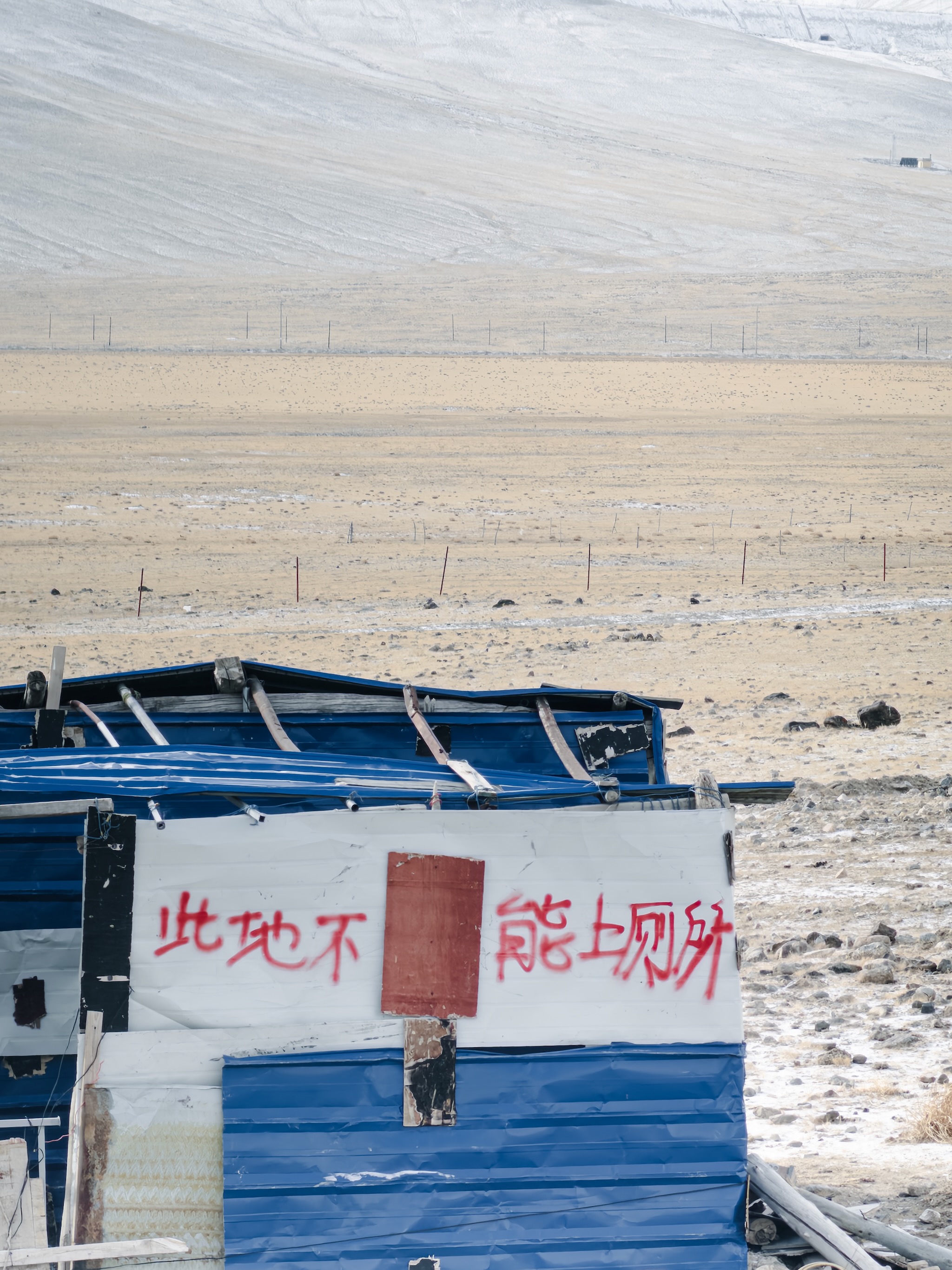
新疆出土文物

Note (2026-01-13 22:17)
“How Consent Can—and Cannot—Help Us Have Better Sex”:
It’s widely accepted that a woman really can consent to sex with a husband on whom she is financially dependent. The immediate though rather less accepted corollary is that she can also consent to sex with a paying stranger. To say anything else, many feminists now argue, would be to infantilize her, to subordinate her—to the state, to moralism—rather than acknowledge her mastery of her own body.
Perhaps, some philosophers suggest, we should not be able to forfeit future consent, either by agreeing to serious bodily injury or death or by entering into a contract that strips us of long-term agency. But, if football players can consent to beat each other up on the field, why can’t we beat each other up in bed? If we want to forbid people from subjugating themselves in the pursuit of their fantasies, we’d have to criminalize both extreme forms of B.D.S.M. relationships and marriage vows that contain the word “serve.”
Critics of this shift worry about encounters where both parties are blackout drunk, or where one appears to retroactively withdraw consent. They argue that a lower bar for rape leads to the criminalization—or at least the litigation—of misunderstandings, and so discourages the sort of carefree sexual experimentation that some feminists very much hope to champion.
[T]he bureaucratization of our erotic lives is no path to liberation.
[A] cultural emphasis on consent—and especially “enthusiastic consent”—has divided “sex into the categories awesome and rape” (Fischel), ignored the complexity of female desire (Angel), and reinforced the notion of sex as something that women give to men, rather than something that equal people can enjoy together (Garcia).
Note (2026-01-13 22:00)
“Heidegger knew that we are always outside, weathering the storms”:
[W]e inhabit [the world] as that in and through which our lives take place and make sense. The world is not a container but the meaningful context in which we dwell. We are in the world in the way that someone is in love or in business.
It is in order to deny our facticity and its associated vulnerability that we want to think of ourselves as indoors. A sovereign, self-enclosed substance is not tied to the destiny of anything else. It does not depend on anything in order to be but exists all by itself. Thinking of ourselves in this way is a self-protective strategy. It purports to make us invulnerable: Deus Invictus, God invincible and unbound.
We are not and cannot be Deus Invictus but must be – if I may put it this way – Homo Implexus, the human being entwined and entangled. The truth is that we are vulnerable beings who live outdoors, amidst other things and at stake in them. To pretend otherwise is to deny the sober truth of your essential finitude as being-in-the-world.
So, if we try to pretend that we dwell indoors, we may win a faux feeling of invincibility. But we lose something more important: our openness to being moved. As Franz Kafka put it: ‘You can withhold yourself from the sufferings of the world; … but perhaps this very act of withholding is the only suffering you might be able to avoid.’
We can now see how being-in-the-world is like being in love. Not only is being in love a way of inhabiting a context of meaning, it is a way of allowing my life to become entangled in what is not up to me.
Note (2026-01-04 21:03)
Kindle Paperwhite 的屏幕还是好看



Note (2026-01-01 22:02)
“No, Hong Kong’s Governance Is Not Becoming Like China’s. It’s Actually Worse.”:
Despite the authoritarian system under Beijing’s rule, mainland authorities do possess institutional mechanisms that absorb public pressure and enforce administrative responsibility in ways Hong Kong currently does not.
While mainland China is also guilty of suppressing criticism and dissent, it has the structural tools to pursue at least modest accountability, and the confidence to allow a tightly controlled safety valve for the fiercest anger.
Many of [Hong Kong’s] key accountability mechanisms were designed and institutionalized during the final decades of British rule, when the colonial government sought to develop Hong Kong into a prosperous global city grounded in professionalism, public accountability, and the rule of law.
These mechanisms, however, can function effectively only in a political environment that favors checks and balances.
Hong Kong has hollowed out the institutional mechanisms that once ensured accountability and effective governance, but it has not developed the structures that support stability in mainland China. The result is a governance vacuum, in which neither democratic nor authoritarian accountability functions effectively.
This structure traps Hong Kong between two governance models. It has weakened the institutions that once supported its administrative legitimacy, yet it cannot adopt the systems of performance-based accountability that make Chinese authoritarianism sustainable. In this context, political suppression becomes one of the few viable tools available to manage discontent.
As long as Beijing values the appearance of “One Country, Two Systems,” Hong Kong will not be able to replicate the mainland’s approach to crisis governance. But without rebuilding its own institutions of transparency and responsibility, the city risks further erosion of public trust and administrative capacity.
December 2025
Note (2025-12-28 21:39)
十年前的上水,十年后的深圳湾

Note (2025-12-27 10:42)
The problem was setup.py. You couldn’t know a package’s dependencies without running its setup script. But you couldn’t run its setup script without installing its build dependencies. PEP 518 in 2016 called this out explicitly: “You can’t execute a setup.py file without knowing its dependencies, but currently there is no standard way to know what those dependencies are in an automated fashion without executing the setup.py file.”
This chicken-and-egg problem forced pip to download packages, execute untrusted code, fail, install missing build tools, and try again.
PEP 658 [putting package metadata directly in the Simple Repository API] went live on PyPI in May 2023. uv launched in February 2024. uv could be fast because the ecosystem finally had the infrastructure to support it. A tool like uv couldn’t have shipped in 2020. The standards weren’t there yet.
Wheel files are zip archives, and zip archives put their file listing at the end. uv tries PEP 658 metadata first, falls back to HTTP range requests for the zip central directory, then full wheel download, then building from source. Each step is slower and riskier. The design makes the fast path cover 99% of cases.
Some of uv’s speed comes from Rust. But not as much as you’d think.
pip copies packages into each virtual environment. uv keeps one copy globally and uses hardlinks (or copy-on-write on filesystems that support it).
uv parses TOML and wheel metadata natively, only spawning Python when it hits a setup.py-only package that has no other option.
Where Rust actually matters
uv uses rkyv to deserialize cached data without copying it. The data format is the in-memory format. This is a Rust-specific technique.
Rust’s ownership model makes concurrent access safe without locks. Python’s GIL makes this difficult. […]
uv is fast because of what it doesn’t do, not because of what language it’s written in. The standards work of PEP 518, 517, 621, and 658 made fast package management possible. Dropping eggs, pip.conf, and permissive parsing made it achievable. Rust makes it a bit faster still.
[…] More
Note (2025-12-25 20:09)
“Why Millennials Love Prenups”:
For much of the twentieth century, judges almost always refused to enforce prenups, fearing that they encouraged divorce and thus violated the public good. They were also concerned that measures to limit spousal support could lead to the financially dependent spouse—usually the woman—becoming reliant on welfare. Nonetheless, in the twenties, as divorce rates increased, potentially pricey payouts became a topic of national debate. As the sociologist Brian Donovan observes in the 2020 book “American Gold Digger: Marriage, Money, and the Law from the Ziegfeld Follies to Anna Nicole Smith,” a veritable “alimony panic” set in. To avoid paying any, men transferred deeds, created shell companies, and, in New York, set up “alimony colonies” in out-of-state locales such as Hoboken, where they wouldn’t be served with papers. Even though courts were equally loath to award alimony—“Judges publicly criticized alimony seekers as ‘parasites,’ ” Donovan writes—the perception that men were being fleeced persisted.
There had been limited cases since the eighteenth century in which prenuptial contracts were recognized in the U.S., but these typically pertained to the handling of a spouse’s assets after death. The idea of a contract made in anticipation of divorce was considered morally repugnant. In an oft-cited case from 1940, a Michigan judge refused to uphold a prenup, emphasizing that marriage was “not merely a private contract between the parties.” You could not personalize it any more than you could traffic laws.
But by the early seventies there was no stemming the tide of marital dissolution: the divorce rate had doubled from just a decade earlier. In 1970, a landmark case, Posner v. Posner, was decided in Florida. Victor Posner, a prominent Miami businessman, was divorcing his younger wife, a former salesgirl. He asked the judge to honor the couple’s prenup, which granted Mrs. Posner just six hundred dollars a month in alimony. The judge, in his decision, acknowledged the cultural shift: “The concept of the ‘sanctity’ of a marriage as being practically indissoluble, . . . held by our ancestors only a few generations ago, has been greatly eroded in the last several decades.”
[…] More
Note (2025-12-24 22:25)
applesque






Note (2025-12-24 20:44)
“Why Does A.I. Write Like … That?”:
Every day, another major corporation or elected official or distant family member is choosing to speak to you in this particular voice. This is just what the world sounds like now. This is how everything has chosen to speak. Mixed metaphors and empty sincerity. Impersonal and overwrought. We are unearthing the echo of loneliness. We are unfolding the brushstrokes of regret. We are saying the words that mean meaning. We are weaving a coffee outlet into our daily rhythm.
Note (2025-12-24 06:17)
「豔屍文學」這個說法本身,我不認爲是一個僞命題。文學與藝術創作史中,大量創作者致力於創造出美麗的女性死亡的畫面。這裏的「美麗」,首先是這個死去的女性外貌必須美麗,她不可能是垂垂老矣,也不可能身材臃腫。在準備死亡的時候,她必定妝容完美,神情優雅;死亡發生的那一刻,這個女性甚至會帶上一絲仙氣。倘若是上吊死的,必定是一滴清淚一抹白綾,吊在繩上容色如初;倘若是高空墜亡,那衣服大概會仙氣飄飄,跌落之後姿勢優美,最好是紅色盛裝躺在雪地裏,映襯出最醒目的亮色。
德國比較文學學者 Elisabeth Bronfen 的 1992 年著作《Over Her Dead Body: Death, Femininity and the Aesthetic》,把西方創作中美麗女性的死亡作爲一個母題,分析對象包括維多利亞時代的繪畫、哥特小說、波德萊爾、普魯斯特、荷里活電影等,奧菲莉亞之死便是其中一個引述的重要例子。該作認爲,男性創作者面對死亡焦慮時,通過把死亡投射到女性身上,凝視女性的死亡,達致把死亡變成一種可控、可理解、可凝視的事物;女性死亡不只是死亡,而是被刻意美化的,是美麗、純潔、寧靜、具有象徵性,體現了文化對秩序、美、與控制的渴望。
[…] More
Note (2025-12-23 06:13)
“The Word ‘Religion’ Resists Definition but Remains Necessary”:
[The Romans’] notion of religio once meant something like scruples or exactingness, and then came to refer, among other things, to a scrupulous observance of rules or prohibitions, extending to worship practices. It was about doing the right thing in the right way.
To arrive at the modern category of religion, scholars now tend to think, you needed a complementary ‘secular’ sphere: a sphere that wasn’t, well, religious. That’s why the word’s modern, comparative sense wasn’t firmly established until the 17th century – Hugo Grotius’s De veritate religionis Christianae (1627) is one touchstone – at a time when European Christendom was both splintering and confronting unfamiliar worlds through exploration and conquest. Even as religion could be conceived as a special domain that might be isolated from law and politics, the traffic with ancient and non-European cultures forced reflection on what counted as ‘true religion’. It’s just that, when Europeans looked at India, Africa, China or the ancient Mediterranean, they sifted for Christian-like (and often Protestant-like) elements: a sacred text to anchor authority, a prophetic founder to narrate origins, a set of theological doctrines to sort out orthodoxy and heresy, and perhaps duties that offered a path to salvation. If a tradition didn’t provide these, scholars might helpfully supply them.
[T]he biblical writers do not stand before the universe feeling compelled to develop a worldview; they stand within a covenantal drama, entwining law, story and communal identity.
True, where science posited impersonal forces, traditional thought posited personal ones. But the underlying move from observed regularities to theoretical constructs was similar; what Europeans wanted to call religion was a pragmatic explanatory framework, reasonable given the available evidence, and part of the same conceptual space as folk biology, folk psychology and everyday causal reasoning.
[S]uccessful reference doesn’t depend on getting the description right. What matters is the causal connection between our words and the things they’re meant to denote. […] Causal theories of reference explain why our words can target the same class of object even when our conception of it shifts, and when the boundaries of the class shift, too.
[…] More
Note (2025-12-22 22:10)
“On Citations, AI, and ‘Not Reading’”:
[T]he problematic way in which we use referencing as a signaling mechanism rather than purely as an epistemological phenomenon.
There is more to read in the contemporary world than can be read within a single lifetime. Therefore, all reading is subject to a type of economic decision making that rests on time as the unit of currency that is to be spent by an individual.
prayer (2025-12-20 11:54)

Note (2025-12-20 06:31)
karpathy reviews LLMs’ year of 2025:
Reinforcement Learning from Verifiable Rewards (RLVR) emerged as the de facto new major stage to add to this mix. By training LLMs against automatically verifiable rewards across a number of environments (e.g. think math/code puzzles), the LLMs spontaneously develop strategies that look like “reasoning” to humans - they learn to break down problem solving into intermediate calculations and they learn a number of problem solving strategies for going back and forth to figure things out (see DeepSeek R1 paper for examples). These strategies would have been very difficult to achieve in the previous paradigms because it’s not clear what the optimal reasoning traces and recoveries look like for the LLM - it has to find what works for it, via the optimization against rewards.
Unlike the SFT [supervised finetuning] and RLHF stage, which are both relatively thin/short stages (minor finetunes computationally), RLVR involves training against objective (non-gameable) reward functions which allows for a lot longer optimization. Running RLVR turned out to offer high capability/$, which gobbled up the compute that was originally intended for pretraining. Therefore, most of the capability progress of 2025 was defined by the LLM labs chewing through the overhang of this new stage and overall we saw ~similar sized LLMs but a lot longer RL runs. Also unique to this new stage, we got a whole new knob (and and associated scaling law) to control capability as a function of test time compute by generating longer reasoning traces and increasing “thinking time”. OpenAI o1 (late 2024) was the very first demonstration of an RLVR model, but the o3 release (early 2025) was the obvious point of inflection where you could intuitively feel the difference.
We’re not “evolving/growing animals”, we are “summoning ghosts”.
Supervision bits-wise, human neural nets are optimized for survival of a tribe in the jungle but LLM neural nets are optimized for imitating humanity’s text, collecting rewards in math puzzles, and getting that upvote from a human on the LM Arena. As verifiable domains allow for RLVR, LLMs “spike” in capability in the vicinity of these domains and overall display amusingly jagged performance characteristics
[…] More
Note (2025-12-17 21:47)
“People Are Too Big to Fit Inside Our Heads”:
As long as we’re alive, we never completely coincide with ourselves. We’re free to go beyond what we’ve been and change. To treat someone as an object that you can understand and predict, therefore, is a bit like killing them, as Bakhtin writes. It’s to deny what’s most deeply human in us.
Note (2025-12-14 15:45)
“Why the World Should Worry About Stablecoins”:
“For the rest of the world, including Europe, wide adoption of US dollar stablecoins for payment purposes would be equivalent to the privatization of seigniorage by global actors.” This then would be yet another predatory move by the superpower.
Yet the [Bank for International Settlements] is also concerned that stablecoins will fail to meet “the three key tests of singleness, elasticity and integrity”. What does this mean? Singleness describes the need for all forms of a given money to be exchangeable with one another at par, at all times. This is the foundation of trust in money. Elasticity means the ability to deliver payments of all sizes without gridlock. Integrity means the ability to curb financial crime and other illicit activities. A central role in all this is played by central banks and other regulators.
Note (2025-12-13 10:21)
《當偶像突然變成系統敏感詞》:
即使追星和國家敘事表面上都有情緒、儀式、象徵物,即使有人會問:它們難道不是同一種情緒動員機制嗎?但它們的本質恰恰相反。
那是因為,國家的儀式、口號、循環播放的聲音,是排他的、單向的、要求一致性的:它把人組織成一個「必須相同」的整體,你必須相信、必須感動、必須站立、必須沉默。
而我們在演唱會里感受到的,卻是完全不同的東西:它是非強制的、開放的、自願的;它允許每個人帶着自己的傷口、自己的故事、自己的目光進入這個共同體。
比起在古拉格相關的文本中尋找可以譴責古拉格的點,更重要的是,詢問這些文本如何使得古拉格成為可能,(這些文本)可能至今仍在自圓其說,讓難以忍受的真理直到今天仍被廣泛接受。關於古拉格的問題,提出的角度不應是做錯了什麼(把問題降至理論的維度),而應該把古拉格作為一個存在着的現實來討論。
[…] More
Note (2025-12-11 06:24)
“I am a Stranger” [我是陌生人] by Xiang Biao [项飙], as an introduction to the book Hello Stranger [你好,陌生人], CITIC Press (2025).
Translated (with abbreviation) by David Ownby; supplemental translations and emphases mine.
[I]t was only in modern times that “stranger” became a relatively stable concept, after a long period in which the idea occupied a prolonged intermediate status somewhere in between.
只有到了现代,“陌生人”成为一个相对稳定的概念,他们长期处于既不是敌人也不是客人的中间状态。
In fact, the realization that there are many people in the world that we don’t know—and that these people might at the same time be connected to us—is itself a modern phenomenon.
意识到世界上有很多我不认识的人,而且这些人可能和我有关,这本身是一个现代现象。
If one of the defining features of the modern era is that people came to understand that distant strangers might be related to them, today the reverse seems to be occurring: we are starting to feel that people we know are unfamiliar to us. Ultimately, this kind of alienation also means that we become strangers to ourselves, unable to recognize who we truly are and what we really want.
如果说,在经典的现代状态下人们意识到陌生人是跟自己有关的,那么在今天,人们感到认识的人和自己无关。到最后,“陌生化”也意味着自己成了自己的陌生人。自己不能够认得自己究竟是谁,不知道自己要什么。
[…] More