Notes
November 2025
Note (2025-11-12 05:57)
Wong, Sampson. Urban Strollology: Learning From Hong Kong [城市散步學:以香港作為起點]. Breakthrough, 2023.
捕捉和收集城市環境中所有美麗、有趣、啟發思考與聯想的空間與細節,就是我的 Pokémon GO 了。
「看出所以然」的意思,連向的就是所謂的「學術關懷」和「地方關懷」。
[社會學家理查‧桑內特(Richard Sennett)的《棲居》(Building and Dwelling: Ethics for the City)]中指出城市必然由兩種事物構成,一種是實體被建造的環境和各種觸摸得到的東西(樓宇),一種是人物生活時無盡的活動與實踐(棲居),兩者互為因果,如何互動影響,千絲萬縷,某程度上城市研究就是拆解它們之間的關係。這本書的知識觀點是,散步與觀看是「棲居」的一部分。我們若有意識地散步與觀看,將有可能進一步改變實體的城市空間。退一萬步而言,當我們持續有意識地散步與觀看,也立刻改變了實踐者本來的「城市生活」,因為頻頻散步的人,不再只功能性地使用城市環境。
當我說散步,我說的是享受觀看城市(第一個目標),以及從帶有反思性的觀看實踐中,得到真切的「地方感」,跟城市更為休戚與共(第二個目標)。
觀看城市時能獲得無窮趣味的訣竅(trick),是先假設每座建築物都值得一看,而每座建築物都可能(可以)打動自己
我很喜歡「習得的口味」(acquired tastes)的說法,有些事物可能特別討好,初遇時就自然喜歡,也有些事物擁有獨特的形態,可能需要經過時間訓練,才能懂得欣賞,而一旦懂得它的魅力,就無法忽視。
遇上每一座建築,我們可以問,它是「高矮肥瘦」?我喜歡它的形狀、比例、線條、組件、顏色、物料和質地(texture)嗎?這建築物座落在怎樣的環境中,喜歡它跟四周的連繫嗎?它有讓我想起其他的建築物?我是否要把它放在我的偏愛清單上?若然把這些問題都記下來,不羞於跟身邊人談論,已足夠讓散步變成繁忙的觀看活動了。
我很喜歡留意中電、港燈和電訊等公用服務、基礎設施相關的建築。這些建築總設在鬧市,但沒有依從旁邊其他建築的設計,往往都顯然有用心。
通道的吸引,必須走在其中才能體會,不能純粹遠觀;若你走得興奮,或有驚喜的發現,就是來自道路上不同元素構成的混合狀態:一條路的寬窄、高低、設施與旁邊建築物的關係,甚或兩端有什麼,種種一切加起來,才是這條路的整體。
通道的美更涉及移動的經驗,而不單純取決於外觀 […]
我們說的開放空間,是人們願意逗留其中,並會因逗留而促成其他事情發生的地方。
留白的空間,不一定是所謂公共的。公共的定義有許多,有人着眼於法理上的擁有權,有人着眼於誰人可自由進出,而有一派城市研究者特別在意空間是否容讓有風險和不可測的事情發生。他們說,真正的「公共」,來自人與人自由而不可預計的對話與互動,而這種不可預計代表空間沒有嘗試計劃一切。當周遭的一切沒有被完全掌控,就代表有風險,或有意料之外、無法計算的事情發生;同時,風險帶來自由,而自由醞釀的,就是觀察公共空間時最具趣味的一環。留白,有機會促成「公共性」。
我們觀看城市裏的留白空間,是在看不同空間有否開創了一種公共性。公共性是指人們樂意在其中逗留,並在逗留時出現不明顯的細微協商。這種協商不是傳統上所指的經談判達致共識,而是當我們都在此活動,可能產生的自行協調與不明顯的細微互動。愈來愈多學者說公共空間之所以「公共」,是因為市民給予它這樣的公共性,願意在其中看見彼此的存在,你眼望我眼,感受到「我們加起來就是公共」。開創公共空間,是拓展人們想要使用的地方,更在體現我們的公民身分。
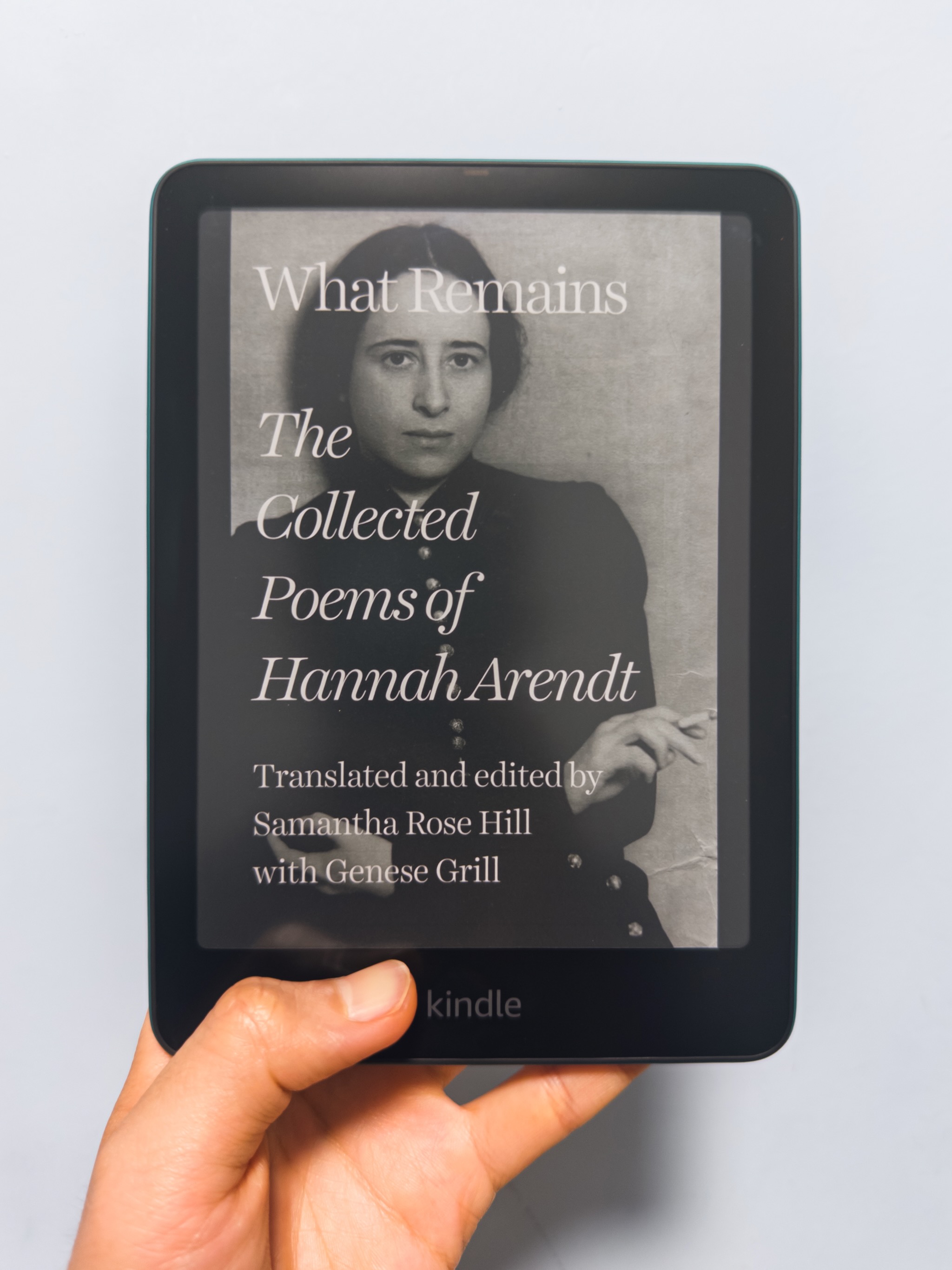
我想起多番論述公共性的哲學家漢娜‧鄂蘭(Hannah Arendt),特別關心「行動」這個概念。公共,來自眾人的活動與行動,每個人在看見彼此的空間中活動,構想自己下一步的行動,沒有必然的決定與軌跡,由此產生了開創性的力量:創造性來自你我皆不知道下一秒會是怎樣,是以下一秒鐘,我可能會做各樣事情,你也可能會做各樣事情,而我們的活動與互動,或會開創新的狀態與局面,這就是公共性的核心所在。從這角度觀看城市,也是觀察「大家都來到這兒」的時刻,有沒有爆發出意想不到的力量。如果說城市會啟動人的自由與可能性,一方面因為留白空間的存在,有片刻沒有預設我們要做什麼,另一方面因為人們的互動,帶來變數與新可能。
論到留白空間,最先聯想到的是公園、廣場、遊樂場等,是被特意規劃出來的開放空間,然後也有私人、半公共的留白。散步時,觀察它們,可看空間的設計構造、如何形塑人在這片空間的活動與互動。另一種則是市民開創的空間。人的活動挪用了一些空地,是行動創造了新的開放空間,但是開放空間可以誕生,也源於城市有意外地留白,即使有些本意不是讓人使用的剩餘空間。
以物件作為觀看的焦點,延伸的思考與關懷是,從這些物件如何被安放、被安放在哪裏,而看見權力的互動。
城市觀察除了可看物件的存在與繁多,也可看物件有沒有被允許,是不是只是一個臨時的存在,或正在掙扎想長期留下。大眾的意志,有時可以共同決定一些物件是不是留在社區,我們觀看時也值得觀看這樣的意志與進程。
把在城市裏遇上的一切視為「文本」,也就是除了觀察,作出美學上的判斷外,也把城市裏所有東西視為「符號」。當有「符號」,我們就需要解碼(decoding)、消化、解讀、解釋,讓不同東西對我「說話」。更準確地說,有些信息甚至是我們自行產生(generate)的,城市裏的東西接通了我的記憶、思考,產生了一些想法、意義,而通過我的特殊解讀和詮釋,一下子變成了只有我才閱讀得到的信息。這種信息比上述所講的更迂迴了,甚至不是「間接」的信息,而是一種很個人、只有在我腦海出現的想法與想像。
當城市忽然在各個角落重複出現一系列的信息,對我來說,是展現了一種難得的詩意和神秘感。我最喜歡的一個例子,就是農曆新年時,店舖習慣在鐵閘貼上「初 X 啟市」,本身只是一種資訊,告訴客人店舖什麼時候開始營業,但當每家每戶都這樣貼的時候,就像變成一場復工的比較。
當社會上很多人開始談論地方,以至對地方的愛和聯想,就可以形成一張地方的意義網。地方的意義可以由大量的對話與交流被激活。當很多人一起講述一個地方、一個角落、一個城市的不同元素,而你聽過別人講解以後,散步時忽然記起其他人的講法,那就如在街上得到了新的聯想和信息,即便這信息沒有被展示出來──那是社群對話所構造的信息。
千禧年之後,地理學是其中一個最多學者反思「什麼是自然」的學科,而我心目中把這概念論述得最清楚的是地理學家 Noel Castree。他一錘定音地指人們大致對「自然」一詞有三種理解。第一,泛指所有「非人類」(non-human),包括動植物和地球的各種物質;第二,指向一種宏觀的力量和秩序,即當我們用到「大自然」(Nature)去講述世界時;第三則是延伸成一種價值判斷,形容一些比較沒有人為參與和改變的情況,像人們會說,暑熱時不開冷氣,是過着比較自然的(natural)生活。而城市研究學者也接續了這課題,在城市空間中探問、注視「城市中的自然」(urban nature),幫助我們多看到什麼、多理解什麼。
這樣的討論非常有趣,點出了看似矛盾的說法。「都市人造環境」的用法一方面提醒我們,城市裏差不多沒有脫離人為這回事,幾乎所有東西都是人為砌出來的。即使是看似最自然、最綠色、最遠離繁喧的中央公園,都是高度人為的產物,由第一代園境大師歐姆斯德(Frederick Law Olmsted)苦心設計經營而成,牽涉大量的建造與日常維護。另一方面,城市裏非人的東西卻又無處不在,植物和動物自然是其中的例子,一切我們賴以維生的水和食物皆取於自然,鋪地和建屋的物料完全取自地球的沙石。因此,「非人的東西」無處不在,不過它們經過極大幅度的人為改造(reworking),再被安放和出現在這片被稱為城市的地方中。如果採納這種理論性思考,在城市中觀看自然,更清晰的說法,就是觀看「非人」的東西,如何被「安放」在城市中,經過怎樣的「改造」過程而進入我們的視線。
在城市中看見動物的樂趣,其實也源於城市是被人類管治的環境,尋找和觀看其他生物,也像把我們帶離了日常和機械式的工作與生活。雖然這跟散步觀看未必有直接關係,但不少研究者提出,城市這種人造環境也會徹底改變一些生物的行為,改變牠們演化的進程。如此一來,有些我們接觸的生物,是物種在城市的版本,也是經過人造環境的改造,是「原產自」城市的。循這樣理解,即使是野生動物,它們也是在過城市的生活,是城市的一員。遇見牠們是看見「城市真實」(urban reality),正視這是被不同物種分享的空間。
城市研究者創造了一個理論化的詞彙 zoopolis,大意可譯為像動物園的城邦,捕捉在人造環境中,人如何治理各種生物的存在形態。我們許多時都忘記了,動物有牠們的行動力和生命力,有機會活出人類意料之外的模樣。
Note (2025-11-12 05:43)
For me, a walk is a way to force practice on a number of crafts manifesting in GOOD WORK (“the reward of good work is more work”).
Note (2025-11-12 05:35)
“Behind the Scenes on How Windows 95 Application Compatibility Patched Broken Programs”:
On very rare occasions, the problem is too deeply embedded in the program, and the only reasonable option is to patch it. Out of safety, the Windows 95 team got written permission from the vendor whenever they needed to patch a program. The consultation included detailed information on what the problem was and how it was going to be patched. In exchange, the team requested information from the vendor on what versions of their product are affected (and if they could send those versions for analysis), as well as a promise to fix the problem in their next version, because the next version won’t have the benefit of the patch.
Note (2025-11-10 06:33)
“Work, After Work: Notes From an Unemployed New Grad Watching the Job Market Break”:
The industrial nations of the twentieth century were built around the idea that work was the organising principle of life. Catholic social teaching talked about the dignity of labour. Socialist movements sang about the worker as a hero. Protestant infused capitalism turned productivity into a route to salvation. Even the centrist stripe of postwar politics treated a job as the main vehicle through which adults were meant to find status, income and a place in the world. This hung around through the neoliberal years, even as manufacturing shrank and services expanded. You can hear it every time someone from any mainstream party talks about “hard working families”.
The result is that a lot of our institutions still act as if giving everyone a job is the primary goal, long after the underlying economic logic has started to drift.
There is a strange symmetry here. On one side you have firms quietly routing labour through screens and robots, and repeating that jobs will be fine on aggregate. On the other you have unions and politicians insisting that jobs must be preserved, even when that means attaching people to tasks that are technically obsolete. Neither camp really articulates what it would mean for work itself to shrink as a central organising story. They just fight over where the remaining jobs will be and who will do them.
Note (2025-11-09 06:38)
“In What Sense Is Life Suffering?”:
[M]ental valence works like temperature.
[S]cientifically (according to the Buddhists) there’s only one kind of emotion: suffering. Apparent neutral is a fact about human perception with no objective significance. If you start at “very bad” and take away suffering, at some point your perception switches from “less suffering” to “more joyful”, but you’ve just been taking away suffering the whole time. The real “zero suffering” isn’t neutral / blah / just okay. It’s nirvana, which feels more blissful than we can possibly imagine.
Note (2025-11-09 06:22)
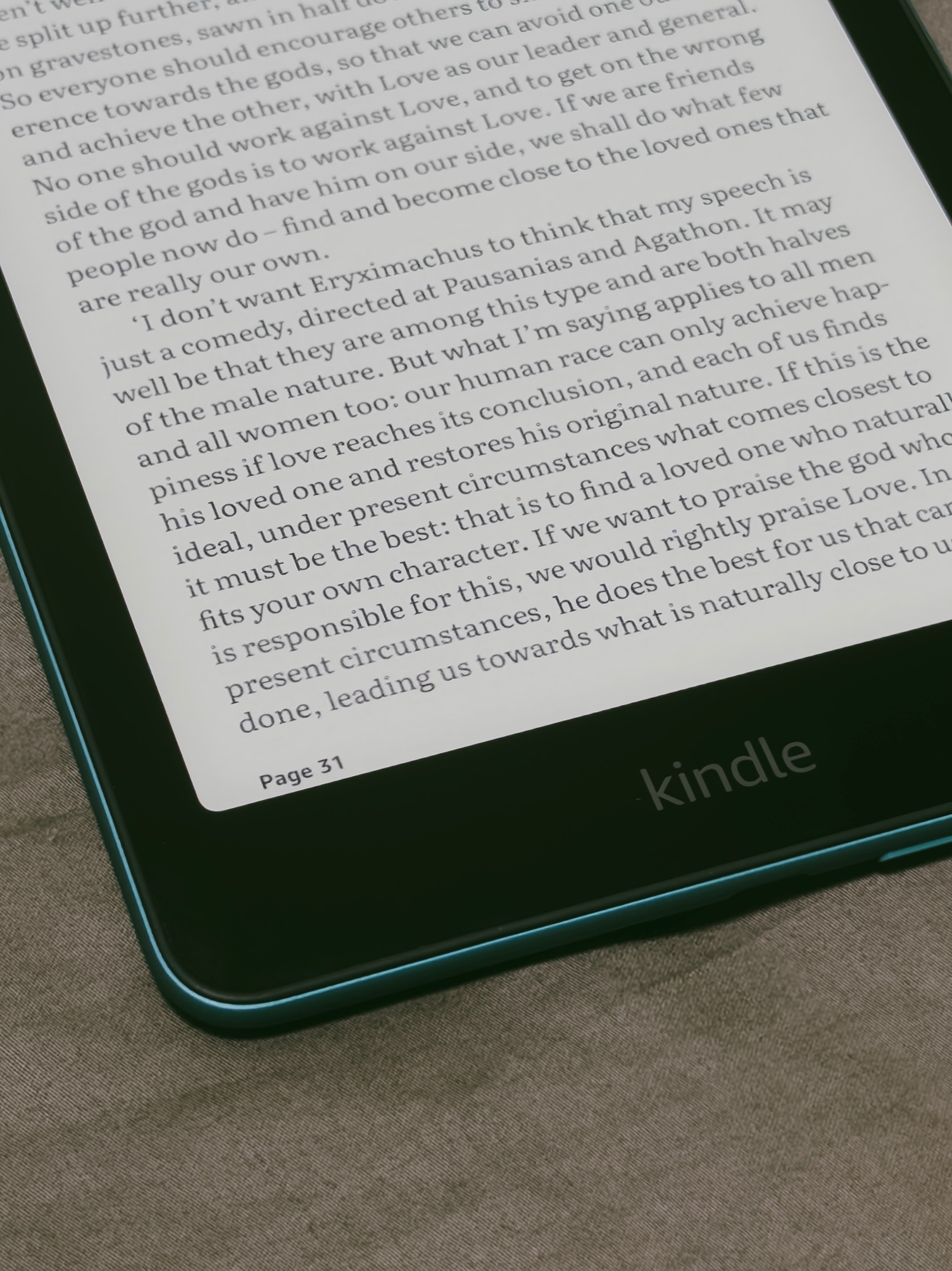
Simplifying his more complex argument, Plato offers at least two main criticisms of poetry. Wrongful poets err by producing a third-order imitation, an image of an image of fundamental reality. They re-enact the actions of mortal souls and states that are themselves re-enactments of the ideal forms of city and soul. Plato, in contrast, provides a second-order imitation, an image at only one remove from the ideal polis and ideal soul. The problem is not poetic images, but the distance from fundamental reality of the images of images that wrongful poets offer. In addition, wrongful poets try to obscure how vacant their subject matter is by the rhythmic seduction of poetic meter. Plato, in contrast, will here speak exclusively in prose (or as Aristotle noted, something between poetry and prose).
Note (2025-11-07 06:35)
“We Used to Read Things in This Country”:
But as interest in historical materialism surged after the global financial crisis of 2008, the left rediscovered the financial press as they searched for the rational kernel within the mystical shell. At first, the Financial Times was the center of attention. As Amber A’Lee Frost wrote in the Columbia Journalism Review, the FT “covers the world as it is—a global battle not of ideas or values, but of economic and political interests.”
[F]or most of human history, culture was exclusively oral. Knowledge was transmitted by speech, and what could be transmitted was what could be remembered. Oral culture was “aggregative rather than analytic”—full of redundancy, traditionalist in disposition, and embedded in the “human lifeworld,” rather than allowing abstract thought. Therefore, it was conservative and traditional, against innovation and any departure from the long-established norms of agricultural life. Repetition, cliché, and formulas are essential, as in Homer with his repeated phrases such as “swift ships” and “wine-dark sea.” With writing comes precision, analytical rigor, deliberate word choices, analytic remove from life, and abstract thought.
Then, with the emergence of electronic media, Ong sees society regressing/advancing into a “secondary orality,” which brings back many qualities of the first orality (note the supposedly permanent basis of writing)
Looking at social media, Weisenthal sees the return of oral values to dominance in the public square, like loud one-upmanship. Rather than the ideal of reasoned debate, social media sets the stage for constant jousting, rewarding those who can be viral and have memes ready in their memory, as today’s Homeric formula shifts both our political and neurological landscapes.
I do not hold that “the history of all hitherto existing society is the history of class struggles” for various tedious factual and periodizing reasons, but I would argue that the history of all hitherto literacy is the history of class struggle.
In the feudal order, there were those who fought, those who prayed, and those who tilled. Since those who prayed were most often those who also administered, what need had most for literacy? Reading was a form of power, which is why the nobility increasingly wanted it for themselves.
The bourgeoisie ascending on both sides of the Atlantic was a class made of ink and newsprint. Aristocracies across Europe were small; they could be bound by common culture and marriages. The bourgeoisie was large, heterogenous, and not able to form kin connections at scale; they required the “many replications” of print to cohere a class identity. Why then would the bourgeoisie allow, much less encourage, their subordinates to also be literate? Because they needed literate and numerate labor from some and hoped to rule others with a Gramscian hegemony transmitted by literacy.
Ong was wrong that secondary orality would remain yoked to literacy. While literacy remains a mass phenomenon, the number of readers and the quality of what they read are declining. At the same time, while memory is traditionally the organizing principle of orality, those immersed in its second coming have seen their faculties of recall replaced by data centers, leaving them bereft of meaningful culture of either the print or oral variety.
[I]t is AI that has given the American ruling class the final impetus to more or less abolish education. As primary and secondary schools prepare to push AI on students, higher-education funding is basically being eliminated. For the first time in centuries, the elite no longer feel they need educated workers and soldiers to uphold and reproduce the system.
‘Brenda’ (2025-11-06 11:31)
People are worried about AI psychosis. They’re worried about the amount of energy that AI uses. Fair. I’m worried that they put Copilot in Excel because Excel is the beast that drives our entire economy. 人们都担心 AI 精神病,都担心 AI 消耗的能源。担心得没错。但我担心的是他们把 Copilot 放进了 Excel,而 Excel 是驱动整个经济的巨兽。
And do you know who has tamed that beast? Brenda. Who is Brenda? She is a mid-level employee in every finance department, in every business across this stupid nation. And the Excel goddess herself descended from the heavens, kissed Brenda on her forehead, and the sweat from Brenda’s brow allows us to do capitalism. 你知道是谁驯服了这头巨兽吗?Brenda。Brenda 是谁?她是这个愚蠢国家每个金融部门、每个企业的中层员工。Excel 女神从天而降,亲吻 Brenda 的额头。是 Brenda 额头的汗水让资本主义得以运作。
Do you know what’s going to happen? Brenda is going to spend her time hatefully crafting a formula, because anyone who works that closely with Excel does not do anything lovingly. The more time you spend with Excel, the more you hate it. She’s going to birth that formula for a financial report, and then she’s going to send that financial report to a higher-up. 你知道会发生什么吗?Brenda 会花时间带着恨意精心制作公式,因为任何跟 Excel 这么亲近的人都不会带着爱去做事。你花在 Excel 上的时间越多,你就越恨它。她会为一份财务报告憋出那个公式,然后把报告发给一个上级。
And he’s going to need to make a change to the report. Normally he would have sent it back to Brenda. But he’s like, “Oh! I have AI, and AI is probably smarter than Brenda!” And then the AI is going to mess it up real bad, and he won’t be able to recognize it, because he doesn’t understand Excel and because AI hallucinates. You know who’s not hallucinating? Brenda. She hasn’t done acid in 20 years. 上级需要对报告做些修改。通常他会发回给 Brenda。但他会想,哦,我有 AI!AI 可能比 Brenda 更聪明!然后 AI 会彻底搞砸,他却看不出来。因为他不懂 Excel,因为 AI 会产生幻觉。你知道谁不会产生幻觉吗?Brenda。她已经 20 年没嗑药了。
And you might say, well, Excel is just math - clearly AI can’t mess up math, right? There are rules. First off, Excel spits on those rules. Excel is a fickle mistress. 你可能会说,呃,Excel 只是数学,AI 肯定不会搞砸数学,对吧?有规则在啊。但首先,Excel 蔑视规则。而且,Excel 就是个反复无常的小三。
Then he’s going to take that financial report into some kind of important shareholder meeting, and then an important company has its stocks tank, and that has some kind of knock-on effect that impacts the rest of the economy. Do you know who would never do that to us? Brenda. 然后上级会把那份财务报告带到某次重要的股东会议上,然后一家重要的公司股票暴跌,然后产生一些连锁反应,影响到经济的其他部分。你知道谁永远不会那样对待我们吗?Brenda。
Note (2025-11-06 07:25)
Taiwan’s faith is a fundamentally different approach than Western religion, more aligned with earthly superficiality and materialism. The majority of temples, like the above one, are singular affairs, each a varying mash-up of Daoism, Buddhism, ancestor worship, and Chinese folk religion, all jammed with idols, icons, effigies, and other devotional objects. Faith is personal, malleable, and image-based, and most importantly, the connection between humans and their God(s) is very different6. Rather than humans seeking the transcendent Good by devotion to a powerful God, they believe in Gods that can be urged, nudged, and even bet on to satisfy their human wants and needs. Or, rather than building a City of Man to try and approximate the City of God, Chinese folk religions believe the City of Man can win over the City of God, with enough urging, offerings, and temples. That’s a very different relationship, devotional versus transactional, acceptance versus persuasive, even if sometimes the required “proper human behavior” overlaps.
I do believe there’s a direct connection between that lack of/different faith, and the intense Asian-style materialism I’ve now seen in Taiwan, Korea, China, and Hong Kong. In each I’ve seen/felt a pronounced spiritual emptiness, an unbound secular materialism that approaches pleasure-seeking narcissism, that has left me frustrated. The clichéd version of a cultural vapidness akin to gorging on cotton candy, and the collectible industry and its fetishization of the cute, is symptomatic of that.
[China] have a “just good enough” ethos that shows up most noticeably in their construction, where everything is less solid than it appears. This extends beyond the physical, and that “surface level is good enough” attitude makes China a simulacrum, so when you leave China, and land in Taipei, Seoul, or Hong Kong, you experience an unmistakable sensation of, “Ok. This is the genuine thing. It’s all more solid.”
[D]iversity is [the United States’] saving grace. We are a much less united country, with a lot more variations in how we live, how we think, and what we aspire to. The stereotype of the NE Asian countries as being largely uniform in thought, while an oversimplification, is certainly true relative to the US, and that makes the superficiality even more pronounced, and suffocating.
There’s another difference, which is that I believe we still feel bad about our materialism. We still have enough cultural memory of our far more sacred past (Protestant work ethic, civic virtue, genuine community) to recognize the emptiness we are embracing, even as we dismantle it. That tension, that guilt, the nagging sense something’s gone wrong, is largely absent in China, because the guardian class doesn’t allow it, or believe it. They’re building a society that embraces our worst tendencies, without any of our compensating doubts.
Note (2025-11-06 07:13)
“Transitions”:
For weeks, I felt an impending loss: the precious fact of having a son was about to be taken away. I wasn’t hung up on dynastic issues. Yet I think there’s something raw, some product of the primitive brain, that makes a father identify with a son. You see yourself in this other, beloved being. I was afraid of losing that.
Of course, transformation works both ways. A change in the person you love changes you as well: a toddler’s newfound independence, a teen’s leaving home. There is a shift in what I can only call the emotional weather—air moister, light different, mornings oddly new. Part of you embraces the change. And part of you remains tethered to the past, stubbornly loyal to the older version of the person.
He had several trans students, he said—his best students. They were serious, precise in their language. “They’re the only students with whom I can have a conversation about the soul,” he insisted. “For the others, that’s a narrow religious concept.” For the trans students, it was an obvious way to talk about identity. They had already made the definitive discovery that the body was malleable, which suggested that some integral part of oneself was other than corporeal. “These people represent the next stage of evolution,” Ajay said, not entirely serious but not quite kidding, either.
In fact, as I was to learn from a subsequent conversation in Berlin, she had never felt herself to be a man at all. “I certainly was a boy,” she told me. “And, like many trans women, I had a protracted boyhood. You see this in gay men, too—the aging-twink syndrome. Anyway, it was when that started to end, and the horizon of manhood approached, that the dissonance became all too clear.”
Note (2025-11-05 07:18)
“How I Learned to Stop Worrying and Love My Shitty Life”
Readers who prefer their self-help to come with a sheen of erudition can increasingly count on finding similar wisdom about human finitude dispensed in the philosophy section. Turning to philosophy to learn how to live is nothing new, of course. But the explicitly inspirational and instructional valence of much that appears today under that heading, even from academic presses, is striking — as is the apparent consensus that the central task of philosophy is to guide seekers to a greater acceptance of imperfection and insignificance. Sometimes these books focus on a particular school of philosophy, giving readers an “-ism” — existentialism, Buddhism, Taoism, and above all Stoicism, now practically a genre unto itself — with which to identify. Others staple together eclectic smatterings of received ideas into less partisan surveys on how to cope with failure and disillusionment.
At last we have managed to reify not merely social reality but the act of philosophizing itself, treating it, like our uncontrollable world, as a thing: a coping tool you might select, like an ice cream flavor, according to your personal taste.
At some point, however, I realized that I was spending more of my time thinking about my own despair than about the problems outside myself that were supposedly fueling it
While an exaggerated sense of our own importance is a recipe for both political and psychological disaster, it is also possible to overestimate our insignificance. Acceptance shades easily into excuse. With enough practice tolerating imperfection you can learn to forget what it is you’re failing to live up to.
When we are left to fend for ourselves, the conditions that shape our lives tend to feel alien and monolithic, forcing us to choose between the two polarities of self-help: the delusional optimism of positive thinking and the stoic acceptance taught by “philosophy.”
But preemptive surrender is no sign of wisdom. Any reality made by human beings can be remade by them. The price of this power is mutual obligation: we can never let ourselves off the hook. The things we can accomplish together are, by definition, within our sphere of control, even if we have to act through structures that are bigger than any of us alone to achieve them. As grating as it may be to admit, it turns out that some of those hoary positive-thinking cliches the philosophers rail against are true, as long as we stick to the first-person plural. We are responsible for how our lives unfold; we can do things that seem impossible.
Note (2025-11-05 07:15)
Henrik Karlsson on Dostoevsky:
If I think something, I don’t need to go through this big roundabout thing, where I “show” it and make it literary. I don’t need to make my writing ambiguous. If I just pay close enough attention to reality, the complexity of reality will seep into the writing and make it ambiguous and charged anyway. There is no need for me to be clever and artful and introduce mystery. Just “telling” it as I see it, if done with enough detail and care, is mysterious enough.
Dostoevsky, unlike most other authors, treats his character as a full individuals, as if they are too big to fit in his head: he isn’t using them as mouth pieces, but listening to them. His books are polyphonic: they are made up of a multitude of voices, each with their own inner logic and perspective, and there is no voice that stands above the others and knows the final truth. There are, of course, many books that have multiple voices in them, especially after Dostoevsky, but when I read these books, there is nearly always a subtle feeling that the characters are being used as dolls by the author, who is trying to get a view across; you can sense what the author thinks of everyone. But in Dostoevsky, each character is so strong and independent that they feel like authors in their own right.
Another thing I love about Dostoevsky is how he incorporates long essayistic segments in his novels, but he always makes sure to undermine the authority of the person expressing the ideas. You get these wonderful philosophical tracts about free will and the Russian church and utilitarianism and the nature of love, but you don’t know what to make of it, really, because the person saying it seems a bit deranged. This is closely connected to his deep respect for the individual: rhetorically convincing the reader of a perspective would undermine their autonomy. Compromising the characters forces the reader to stand alone, to borrow Kirkegaard’s phrase. Since there is no safe authority that you can submit to in Dostoevsky’s books, it is up to you to meet these hurting, strange voices with compassion, critical thinking, and curiosity; you have to evaluate if anything they say is valuable and true and applies to your life. As Ivan in The Brothers Karamazov says, there is nothing more painful to humans than our freedom, that we are responsible for everything we do, and so we long to submit to an authority. But Dostoevsky just won’t let us do that. He forces us to face our freedom.
Note (2025-11-04 06:39)
PR people, always in search of influence, [] are developing a form of writing (press releases and influence campaigns are writing) that’s not so much search-engine-optimized as chatbot-optimized. It’s important, they say, to write with clear structure, to announce your intentions, and especially to include as many formatted sections and headings as you can. In other words, to get ChatGPT to pay attention, you must write more like ChatGPT.
The hour, in other words, is near, and, instead of being short-sighted or risk-averse, we should set to preparing. But for what? Again, for jumping into the AI mind, both to influence it and to hedge against human superfluousness. And how? The best way, Gwern thinks, for people who don’t work in AI at least, is to simply communicate in public to the AIs that already exist. “Much of the value of writing done recently or now is simply to get stuff into LLMs,” so as to teach them, he writes.
In an interview, he elaborated: “By writing, you are voting on the future of the shoggoth using some of the few currencies it acknowledges. If you aren’t writing, you’re kind of abdicating the future or your role in it.”
After all, you vote in elections even though you don’t expect to have a great effect on the result, because it’s important on some absolute moral level to send your wishes into the world. This sort of general moral thinking seems to me valuable here precisely because nobody knows what will happen, whether influence will compound or diminish over time. Turning to already formed instincts about how to interact with vast and complicated systems is a helpfully familiar way of not being paralyzed by weirdness and uncertainty. That sort of moral thinking is also crucial to mounting a case for human value even when compared to superintelligence.
[T]here’s a reverse wager implied. If you’re one of these people, and if you want to be forgotten—an honorable instinct and possibly a right—and if you don’t want to be resurrected by AIs, then you absolutely must not write for them. In fact, the bitter conclusion is that you must not write at all, ever. For just as it’s now basically impossible to disappear, go somewhere, and start again, soon it will be impossible to be forgotten, and one day that might mean it’s impossible to not be brought screaming back.
The best way to communicate across the gulf between present and future is to place little droplets of values inside larger droplets of expression so that someone in the future, noticing how nice they look, stops to look at them more carefully.
Note (2025-11-03 20:39)
“Do piped programs run sequentially or in parallel?”:
Piped commands are run in parallel. They keep reading from the pipe until they are terminated, they finish their work, or they receive an end-of-file indicator. When a pipe (or the data read from a pipe) gets too large, the command is terminated to prevent the system from running out of RAM.
Note (2025-11-02 22:51)
“Why Immanuel Kant Still Has More to Teach Us”:
“If a wind should rage in the guts, what matters is the direction it takes. If downwards, then the result is a fart; if upwards, an apparition or a heavenly inspiration.”
The central insight that these disparate thinkers took from Kant is that the world isn’t simply a thing, or a collection of things, given to us to perceive. Rather, our minds help create the reality we experience. In particular, Kant argued that time, space, and causality, which we ordinarily take for granted as the most basic aspects of the world, are better understood as forms imposed on the world by the human mind.
[I]t is impossible for us to ever know “things in themselves”—what Kant called “noumena.” We have access only to “phenomena”—the way things look to us, given the kind of mind we have. “What things may be in themselves, I know not and need not know, because a thing is never presented to me otherwise than as a phenomenon,” Kant insisted.
Ordinarily, we think of good will as a kind of emotion: a person of good will is happy when other people are happy. But, for Kant, emotion is irrelevant to morality. In fact, he believes that if you do the right thing because it makes you happy you don’t have a truly good will, because you are acting out of a kind of self-interest. The only thing that should determine how we act is a pure sense of duty. When a man “does [an] action without any inclination for the sake of duty alone, then for the first time his action has its genuine moral worth,” Kant writes.
Note (2025-11-02 21:51)
“Big Tech’s Futile Attempt to Kill Death”:
The Silicon Valley immortalists, too, are Lockeans to a person. They do not want to be remembered; they want to be remembering. They are so certain that the matter of what a person is is so thoroughly settled that we can simply move on to other theoretical questions that confront us in our quest for immortality.
The commitment to substrate-neutrality is almost as widely accepted as Lockean personal identity, but not so widely as simply to be assumed true. A person, in this reigning metaphysics of Silicon Valley, is a special kind of substrate-neutral code that has the peculiar property of being aware of its own existence. Technology, they believe, can enable us to manipulate that code, to improve on it, and perhaps when the time comes, to transfer it out of a failing mortal coil and into a more robust vessel. Their idea of what a person is, and of what immortality might be, is entirely shaped and limited by the philosophy of liberal individualism: an opportunity to keep on “living one’s best life”, and if possible, of doing so in one’s own apartment.
[T]hose who can afford to be early adopters get to set the terms by privately trialling interventions, while public institutions are nudged to ratify a vision in which the extension of time becomes a status object.
Riding Bikes in Hong Kong (2025-11-02 14:58)
Pursuant to 第 374 章《道路交通條例》 [Cap. 374 Road Traffic Ordinance] —
單車 (bicycle) 指經設計及構造為使用踏板驅動的兩輪車輛。 [bicycle (單車) means a vehicle with 2 wheels designed and constructed to be propelled by the use of pedals.]
Which means —
單車或三輪車基本上享有和汽車一樣的使用道路的權利。同樣地,單車或三輪車使用者在使用道路時也有適當相應的責任,並須遵守一切交通規則(例如遵守所有交通標誌、交通燈號及道路標記),猶如他/她是在駕駛汽車一樣。 [A bicycle or tricycle basically has the same right to use a road as a motor vehicle. Needless to say, the rider of a bicycle or tricycle also has the duty to exercise due care when using the road and to comply with all traffic regulations (e.g. to comply with all traffic signs, traffic lights and road markings) as if he/she is the driver of a motor vehicle.]
“與騎踏單車有關” [Related to cycling], Community Legal Information Centre.
See also “道路使用者守則” [Road Users’ Code] by the Transport Department of Hong Kong:
騎單車 [Cycling]
單車被視為車輛。在道路上,騎單車者有同樣責任遵守適用於駕駛人的規例和規則。 [A cycle is regarded as a vehicle. A cyclist has the same obligation to follow the rules and regulations applicable to drivers when cycling on the road.]
一般駕駛人須遵守的交通標誌、交通燈號、道路標記及交通規則,你也必須遵守。 [You must obey traffic signs, traffic signals, road markings and traffic rules that apply generally to vehicles.]
除非巴士線上豎立了標誌,禁止單車駛入,否則你可沿巴士線行駛。 [You may use bus lanes unless there are signs banning cyclists.]
在「綠色人像」過路處前,如紅燈亮着,你必須在「停車」線前停車等候。只有當綠燈亮起及前路無阻時,方可繼續前進。無論何時,都應讓路給仍在過路的行人。 [At ‘Green man’ crossings, you must stop and wait behind the ‘Stop’ line if the red light is showing. You may only go forward if the green light is showing and the way is clear. Give way to any pedestrians still on the crossing.]
單車徑 [Cycleways]
如道路上有單車線,或路旁有單車徑,你必須在該處行駛,不准使用其他路面。 [If there is a cycle lane, or an adjacent cycleway beside the roadway, you must ride on it and not on any other part of the roadway.]
如單車徑旁有行人徑,不准駛上行人徑。 [If there is a footpath and a cycleway side by side, you must ride on the cycleway only.]
須按照交通標誌及道路標記指示的方向騎單車。 [Ride only in the direction indicated by traffic signs and road markings.]
在雙程單車徑上,靠左行駛。 [On a two-way cycleway, keep to the left.]
「終止」交通標誌或道路標記示明單車徑的終止。你要駛入或回到一般道路,與其他車輛共用路面。 [An ‘End’ traffic sign or road marking may indicate the end of a cycleway. You have to join or return to the normal road and ride with other traffic.]
停泊車輛的規則和指示一般也適用於停泊單車。在設有街燈的道路上,只可在指定供單車停泊的地方停泊單車。然而,任何單車均不得於同一泊車處停泊超過 24 小時。 [The rules and advice for the parking of vehicles generally apply to cycles. On a road with street lighting, you may only park your cycle in a parking place designated for pedal cycles. However, no cycle should be continually parked at the same parking place for more than 24 hours.]
Cf.《道路交通安全法》 [Road Traffic Safety Law] §51 of Mainland China:
非机动车应当在非机动车道内行驶;在没有非机动车道的道路上,应当靠车行道的右侧行驶。[Non-motorized vehicles should use the non-motorized vehicle lane; or, where no such lane exists, should proceed on the right side of the roadway.]
Note (2025-11-01 20:00)
“Microspeak: Turn Into a Pumpkin”:
In some fields, the idiom turn into a pumpkin means to regress to a previous level of performance after a period of marked (but perhaps inexplicable) improvement.
October 2025
Note (2025-10-31 07:29)
Wilhelm von Humboldt on “the individual man, and the highest ends of his existence” (via Henrik Karlsson):
The true end of Man, or that which is prescribed by the eternal and immutable dictates of reason, and not suggested by vague and transient desires, is the highest and most harmonious development of his powers to a complete and consistent whole. Freedom is the grand and indispensable condition which the possibility of such a development presupposes; but there is besides another essential,—intimately connected with freedom, it is true,—a variety of situations.
The efficiency of all such unions as instruments of cultivation, wholly depends on the degree in which the component members can succeed in combining their personal independence with the intimacy of the common bond; for whilst, without this intimacy, one individual cannot sufficiently possess himself, as it were, of the nature of the others, independence is no less essential, in order that the perceived be assimilated into the being of the perceiver.
[I]n the highest sense, that each still perceives the beauty and rich abundance of the outer world, in the exact measure in which he is conscious of their existence in his own soul.
Now, whatever man receives externally, is only as the grain of seed. It is his own active energy alone that can convert the germ of the fairest growth, into a full and precious blessing for himself. It leads to beneficial issues only when it is full of vital power and essentially individual. The highest ideal, therefore, of the co-existence of human beings, seems to me to consist in a union in which each strives to develope himself from his own inmost nature, and for his own sake.
It is, on the other hand, undeniable that, whereas physical variety has so vastly declined, it has been succeeded by an infinitely richer and more satisfying intellectual and moral variety, and that our superior refinement can recognize more delicate differences and gradations, and our disciplined and susceptible character, if not so firmly consolidated as that of the ancients, can transfer them into the practical conduct of life […]
[R]eason cannot desire for man any other condition than that in which each individual not only enjoys the most absolute freedom of developing himself by his own energies, in his perfect individuality, but in which external nature even is left unfashioned by any human agency, but only receives the impress given to it by each individual of himself and his own free will, according to the measure of his wants and instincts, and restricted only by the limits of his powers and his rights.
Reason must never yield aught save what is absolutely required to preserve it.
Note (2025-10-30 06:46)
In his 2013 essay “Book of Lamentations,” cultural critic Sam Kriss reviews the fifth edition of the Diagnostic and Statistical Manual of Mental Disorders as if it were a work of dystopian literature, a kind of nightmarish encyclopedia in the lineage of Borges. Kriss argues that the manual is a literary object with a deeply unreliable narrator, who writes with a coldly compulsive voice that cannot perceive its own madness. “As you read, you slowly grow aware that the book’s real object of fascination isn’t the various sicknesses described in its pages, but the sickness inherent in their arrangement.”
Kriss sees the DSM as a device of absurdity and detachment because he reads it as making assumptions that are not explicitly present in the book itself: that madness is internal, individual, and biologically determined. The DSM’s silence on these issues does little to dispel this interpretation.
Since its first edition in 1952, the DSM has gradually evolved from a slim document meant to standardize psychiatric recordkeeping into a sprawling classification system that shoulders a set of responsibilities it was never designed to bear. It is expected to guide clinical care, enable research, satisfy insurance companies, anchor epidemiological studies, shape patient self-understanding, and serve as a platform for public policy. Each of these demands pulls the manual in different directions.
In advance of the DSM-5, there were hopes for a “paradigm shift” which would incorporate findings from neuroscience and create a more dimensional, biologically based system.The neo-Kraepelinians had believed that with iterative research, biological validators would point towards the hidden disease entities, in much the same way that syphilis had been identified in the early 20th century as a cause of a then-common condition “general paralysis of the insane.” But by the 1990s, it was becoming obvious to scientists that validators of DSM categories did notconverge in any neat fashion.
DSM-5 became the symbol of a deep tension within the field. Psychiatry wanted to be seen as part of clinical neuroscience, but didn’t yet have the evidence to fully support that shift. The controversy around DSM-5 also hurt its public image. While it remains the go-to manual in practice — since no alternative has been able to displace it — it no longer carries the same unquestioned authority.
Even if genes or brain scans do not line up with DSM categories, researchers have found plenty of evidence that biological processes such as genetic factors, inflammation and brain circuitry are involved in mental illness. These patterns aren’t random or meaningless; they’re just far more complicated and messier than we had hoped. “Biology never read that book,” Thomas Insel famously said about the DSM.
And yet, in the new clinical, atomized, and oddly impersonal idiom, “having OCD” or “having ADHD” invites one to imagine essences within oneself that do not exist. This linguistic shift, McWilliams observes, often accompanies a deeper psychological distancing. People present themselves as hosts to diagnostic entities, rather than agents struggling through difficulties. In the most extreme cases, that essence becomes all-pervading, a core of who they are.
The DSM was never crafted with the purpose of helping individuals make sense of their own psychological struggles, nor is it particularly well-suited for that task. The DSM is a tool for clinicians and researchers. It presumes a baseline of clinical training and medical knowledge, and an appreciation of methodological limitations. It is not a guidebook for laypeople navigating their inner worlds.
The DSM, with its deliberately “user-friendly” format and preference for everyday language, appears vulnerable to misinterpretation by the public.
The psychologist Eric Turkheimer has commented that psychiatric diagnosis is a “relief from the Sisyphean burden of understanding the relationship between our bodies and our intentions.” It’s exhausting to ask, again and again, why we suffer so intensely, despite our efforts to feel otherwise, or why we return to self-destructive habits even when we know better. Our struggle with these questions leaves us emotionally depleted. If calling these struggles “disorders” offers a kind of balm, a way to temporarily suspend the ambiguity, then maybe that’s a mercy.
Where in Turkheimer’s perspective diagnosis offers a reprieve, it offers only confinement to Oyler. She doesn’t want to be cornered by language, to have her fluctuating experiences pinned under a diagnostic term. This resistance, however, shows just how powerful those terms can be. We seem to need them for our suffering to feel real, and yet we bristle when they confine us.
The debate around Asperger’s syndrome should have sparked a collective realization: that the sense of self shared by those who identify as “Aspies” never needed to hinge on whether the DSM retained that term. How can a medical manual, subject to change, driven by evolving criteria, have the authority to define or dissolve a social identity? Social identities live and die on their own terms.
Psychiatric classification as a clinical and scientific project is not designed as a tool for existential self-definition. It is not for you. No diagnostic manual can tell people who they really are.
My hope in these conversations with patients is to plant a seed of resistance, to offer an account of suffering that acknowledges complexity, contingency, and context beyond categories. I try to say, in effect: this pattern of symptoms reflects something meaningful about your psychological life, but it doesn’t define you. It shouldn’t be the scaffold upon which you build your entire self. You’re free to acknowledge it, even to use it as a lens, but don’t let it confine you. Do not let it determine your story.
And yet, I am aware that at a certain level this message is deeply unsatisfying, both to those who see diagnosis as a scaffolding and to those who see it as a trap. In gesturing toward the messy interweaving of temperament and trauma, and softening the solidity of diagnoses, I refuse to indulge our strange masochistic desire for categorical self-confinement.
Note (2025-10-26 17:14)
Wong, Sampson. Hong Kong Walkology [香港散步學]. White Paper, 2022.
我們常常會以「功能」來理解身邊城市中的一切:車站是用來乘車的、商場是用來購物的、郵局是用來寄信的。每一個地點,彷彿都有著既定功能,我們只是透過這些地點來做到這些功能。
只要一個人對跟城市空間相關的一切充滿熱情,他就是個 Urbanist。每座城市都有極其熱愛談論那座城市中各種各樣地方的人,而且談起來多是如數家珍般充滿激情,借用地理學家段義孚的說法,他們有種「對地方的愛」(Topophilia),也有強烈的「場所感」(Sense of Place)。
第一種關懷,是練習出一種「Mode」,走在城市裡頭,有辦法「開眼」和打開所有威官,忽然金睛火眼,「見到」最多。這種「Mode」,我時常叫作「掂行掂過」的相反。
有說山、樓、海之壓縮與緊靠,是香港城市地景的最獨特之處,走在百福道,正正可烕受到這種「好香港」的魔幻城市臧。
無可置疑的是,[己連拿利天橋] 盡現香港城市設計和基建所產生的空間,其複雜性之極致,而更有趣是,這種道路規劃的複雜性,竟又好像顧及了行人的經驗,讓置身其中的人,可以享受不可思議的移動體驗。這套落成於一九七九年的天橋系統,充滿現代主義建築高峰期的烏托邦色彩(天橋還特意立了開幕碑)。好多人都把焦點放了在「環形隧道」這個「打卡位」但我帶朋友走到這兒時,最強調的是如何「窮盡」它生產出來的每一重 Layer,看看它可以讓行人走到什麼方位、何等高低,轉換多少視點。
雖說 [「風之塔」] 有少許怪,但並不是批評,在香港,難得有官方的公園可以容納這種「半公共藝術」、「半懷舊」、「半功能性設施」的亭樓(Pavilion),實是有點趣味。在世上許多城市,公共空間裡都有這種難以準確界定、純粹給人多點空間體驗的「微建築」°
香港只有兩條跨海大橋是容許行人走上去散步的(第三條是預計二零二二年峻工的將軍澳跨灣連接路),近年也多人知道了。這兩條大橋,一條是在荃灣與青衣之間的青荃橋,另一條正是鴨脷洲大橋。
這條香港仔避風塘堤壩之不可多得,在於香港大多近海的路都有圍欄,在這兒散步,那種讓人「浮在海中央」的自由之眾,在別處不易找到,可謂香港絕境(曾經在西區貨物裝卸區也可有近海的「無欄杆體驗」,但現在它已不對外開放)。黃昏時分到訪這兒,因為向西一面全無阻隔,日落景色無敵;到了晚上,此處自然也是首屈一指的浪漫之地。
這批市政大廈的設計,線條方正,有許多通道連接四周,看起來有點笨重,所有細節都是功能主導,但有種簡單得來、配合到其「功能上的野心」的簡潔美學。許多八、九十年代的市政大廈,都帶點那個時代日本動畫中機械人基地的味道。
可以是圍繞著彩虹邨走一圈,觀察它如何被幾條交通極繁忙的高速公路包圍著,同時亦有無數的地面路徑可以步進邨裡。從整體的空間佈局來看,每一「面」彩虹邨高樓都像圍牆,組成現代主義住宅的堡壘,像框出了這些板塊之間的生活空間。
[隱藏在彩虹道橋下的奇異微型公園] 一直在我珍藏的隱蔽公共空間清單上,它是香港典型利用剩餘空間造出來的雞肋環境,雖然不實用,亦未必有人鍾愛,但那種「怪雞」,對喜愛在城市尋幽探祕的人來說,就好比美食家眼中的羌婪「識欣賞就會好沉迷」。
而我一直很喜歡主教山,因為它是社區居民自發由下而上營造公共空間的典範,山上有各種街坊親自帶去的設備(包括乒乓球枱!),完全體現了「一人做啲」的精神,令整座小山有非常豐富的細節和自建空間的痕跡。
總覺得沿著九龍城道,在東九龍走廊下散步,有在台北一些地帶行走的況味。高速公路天橋遮蓋了這段路大部分面積,以致橋下氣氛有點陰沉,跟旁邊活躍的街道生活與街市買賣形成反差。我喜歡烈日當空時在有陰影與被太陽曬到的橋下空間之間交替行走,戚受兩邊的差異。
[將軍澳南] 這一帶也成為很好的提醒:雖然業權上和概念上,公與私的空間很分明,但私人的住屋空間建成後,必然產生出「共用」的社會空間,例如在香港,就有屋苑附帶的商場環境、天橋、連接通道等等。雖然這些地帶規矩分明,但不是百分百開放。同時,它們也決定了在附近居住的人,可以擁有怎樣的日常環境。
Note (2025-10-24 17:13)
Nick Heer on Liquid Glass:
iOS’s system theme was not branded from when it was first shown in 2007.
[I]t is not the first time Apple has used the term [“Liquid.”] Since 2018, it has described high-resolution LCD displays with small bezels and non-zero corner radii — like the one on my MacBook Pro — as “Liquid Retina displays”.
Apple is emphasizing another defining characteristic of the Liquid Glass design language, which is that each part of the visual interface is, nominally, concentric with the bezel and corner radius of a device’s display.
[The Liquid Glass] is as much a reflection of the intent of Apple’s human interface designers as it is a contemporary engineering project, far more so than an interface today based on raster graphics. That it is able to achieve such complex material properties in real-time without noticeably impacting performance or, in my extremely passive observations, battery life, is striking.
Apple also tries to solve legibility by automatically flipping the colour of the glass depending on the material behind it. […] If Apple really wanted to improve the contrast of the toolbar, it would have done the opposite. […] It is Apple’s clever solution to a problem Apple created.
It seems Apple agrees [corner radius] is more appropriate in some apps than in others — app windows in System Information and Terminal have a much smaller corner radius.
Even on a device with four rounded display corners, this dedication to concentricity is not always executed correctly. My iPhone 15 Pro, for example, has corners with a slightly smaller radius than an iPhone 16 Pro. The bottom corners of the share sheet on my device are cramped, nearly touching the edge of the display at their apex.
In a column view in Finder, for example, there is a hard vertical edge below the rounded corner of the ostensibly floating sidebar. I am sure there are legibility reasons to do this but, again, it is a solution to a problem Apple created.
It could simply be an exercise in branding. Apple’s operating systems have shared a proprietary system typeface for a decade without it meaning anything much more than a unified brand. And it is Apple’s brand that supersedes when applications look the same as each other no matter where they are used. In my experience so far, developers that strictly adhere to Apple’s recommendations and fully embrace Liquid Glass end up with applications having little individual character.
So far, Apple justifies this redesign, basically, by saying it is self-evidently good for all of its platforms to look the same. This is an inadequate explanation, and it is not borne out in my actual day-to-day use.
[O]n today’s hardware that is, to me, less of a showcase for Apple’s visual design cleverness and more of a means to get things done.
Note (2025-10-23 21:50)
“When Is Better to Think Without Words?”
When we put words to a thought, we have to compress something that is like a web in our mind, filled with connections and associations going in all directions, turning that web into a sequential string of words; we have to compress what is high-dimensional into something low-dimensional.
[C]ompression is effortful. It takes intense concentration to find the right words (rather than the sloppy ones that first come to mind), and then to put them in the proper order.
If we can avoid the compression step, and do the manipulations directly in the high-dimensional, non-linguistic, conceptual space, we can move much faster. But this is a big if. Most people, myself included, have too weak mental models to do this kind of processing for complex problems, and so, our thoughts are riddled with contradictions and holes that we often don’t notice unless we try to write them down. We can move faster in wordless thought, but we’re moving at random. If, however, you have deep expertise in an area, like the mathematicians, it is possible to let go of the language compression and do a much faster search.
The insights arrived at wordlessly need to be submitted to the rigor of mathematical notation and logic, to test their validity. It is a sort of feedback mechanism: unless the intuition holds up on the page, it is a false intuition.
The written results also work as relay results. By writing something down and making sure it is solid, we can offload that thought from working memory and instead use it as a building block for the next step of the thought.
When writing, there are all sorts of details that need to be specified for our paragraphs to make sense, and if we don’t know what should go into a sentence, it is all too easy to fill in the uncertain parts with guesses. At least my brain has the most miraculous autocomplete function and supplies me with credible endings to any sentence I start—often credible nonsense. But when the nonsense is there on the page, next to thoughts I’ve settled through hard work, it looks respectable! It often takes considerable work to realize I’ve fooled myself.
Note (2025-10-23 06:48)
Software using the Public Suffix List will be able to determine cookie inheritance boundaries between domains, preventing cookies set on one domain from being accessible to other domains under the same public suffix. This protects users from cross-domain cookies setting while still allowing individual domains to set their own cookies.
As well as this, the Public Suffix List can also be used to support features such as site grouping in browsers.
Note (2025-10-23 06:36)
“Art Must Act”:
Instead of delineating an artwork’s place in the unfolding of historical tendencies, or revealing its interest as a lens onto social problems, the critic must judge the artist’s action for how it reveals a life.
[E]xtremist ideologies of the Right and Left responded to the real problems of modern society by offering illusory collective identities and narratives that substituted for genuine action and an authentic self. Liberals who opposed these ideologies, they warned, were no less susceptible to such illusions.
In promoting a smug conformism disguised as free thinking, the little magazines, he warned, were drifting into dithering liberalism that substituted a cozy in-group identity for real possibilities of intellectual and political action.
Proponents of the ‘new painting’ responded to this situation by abandoning both politics and aesthetics – the goal of either changing society or of creating beautiful, interesting or otherwise significant objects. They sought instead, with ‘a desperate recognition of moral and intellectual exhaustion’, to ‘act’ through the creation of artworks ‘in the form of personal revolts’.
In referring to them as action, he stressed that these experiments should be judged for their effectiveness in changing the situation and character of those performing them.
He was sceptical whether the ‘personality-myth’ of the ‘lone artist’ was a true resource for resistance or a lure by which artists would let themselves be co-opted.
The only way to reconnect with the experience of the latter, Newman posited, was to use techniques of abstraction as a kind of ascetic purification bypassing art history, moving the spectator ‘beyond the aesthetic into an act of belief’, in a sublime without theology, ideology, ritual or creed.
If both the pose of the isolated, marginal creator defying social conventions and that of the freethinking intellectual rejecting mass society had become deceptive guises for a failing liberal order, then perhaps the solution, after all, was to work out paths for action from within, and not outside of, the structures that seemed to thwart it.
One of the few forms of action is for intellectuals, putting aside any claims to expert knowledge, to express in a compelling, personal ‘style’ their own reactions to what they see – with honest disgust and outrage, rather than cool, dispassionate investigation or critique. Instead of reaching for the mask of ‘the expert’ posing as a master of impersonal facts (a role for which the public now had only well-earned contempt), the intellectual who wants to reach the public should become a ‘participant in the family table talk’, speaking straightforwardly (albeit in an ‘unusually brilliant’ way) about things we all see and feel. In an era that no longer believes in truth, Rosenberg warned half a century ago, the intellectual must become a kind of populist, just as the artist might become a comedian.
What’s most significant about Rosenberg’s criticism is that, as he shifted attention from one artist to another, he consistently sought to evaluate what a given artist’s work revealed about how an individual in our society can use the cultural and institutional resources available to pry themselves out of their old personae and craft a new, more expansive and enfranchising identity. Throughout decades of writing about art, he always held that artists were to be judged for their success or failure at acting – that is, in finding ways to resist routine, cliché and conformity on the one hand, and self-deluded escapism and fantasy on the other. These twin evils, he never stopped arguing, arise from the very nature of our capitalist society.
But his friend Hannah Arendt took up many of his ideas in her opus The Human Condition (1958), which argues that political life, like aesthetics, is characterised by an innate, albeit now widely ignored, human need for self-display through performances that are not labour, or routine, or ritual, but what she, following Rosenberg, called ‘action’.